DALLE TWIN TOWERS AL NUOVO WORLD TRADE CENTER: storia di una trasformazione architettonica, urbana e simbolica
Ci sono edifici che appartengono a una città. E poi ci sono edifici che finiscono per appartenere al mondo intero.
Le storiche World Trade Center — le celebri Twin Towers — erano esattamente questo: non soltanto due grattacieli nel cuore di Manhattan, ma il simbolo visivo di un’intera epoca. Per decenni hanno rappresentato l’idea stessa di modernità americana: immense, perfettamente geometriche, dominate dalla logica della crescita economica e della potenza finanziaria.
Quando vennero progettate negli anni Sessanta dall’architetto Minoru Yamasaki, gli Stati Uniti vivevano il culmine della fiducia nella tecnologia, nella crescita economica e nella modernizzazione delle grandi città.
New York stava cambiando rapidamente. Manhattan diventava sempre più il centro della finanza globale, e serviva un complesso capace di incarnare quella centralità economica.
Le Twin Towers nacquero con questa missione: essere il simbolo materiale della globalizzazione americana. Negli anni Ottanta e Novanta il World Trade Center diventò il ritratto perfetto della nuova economia.
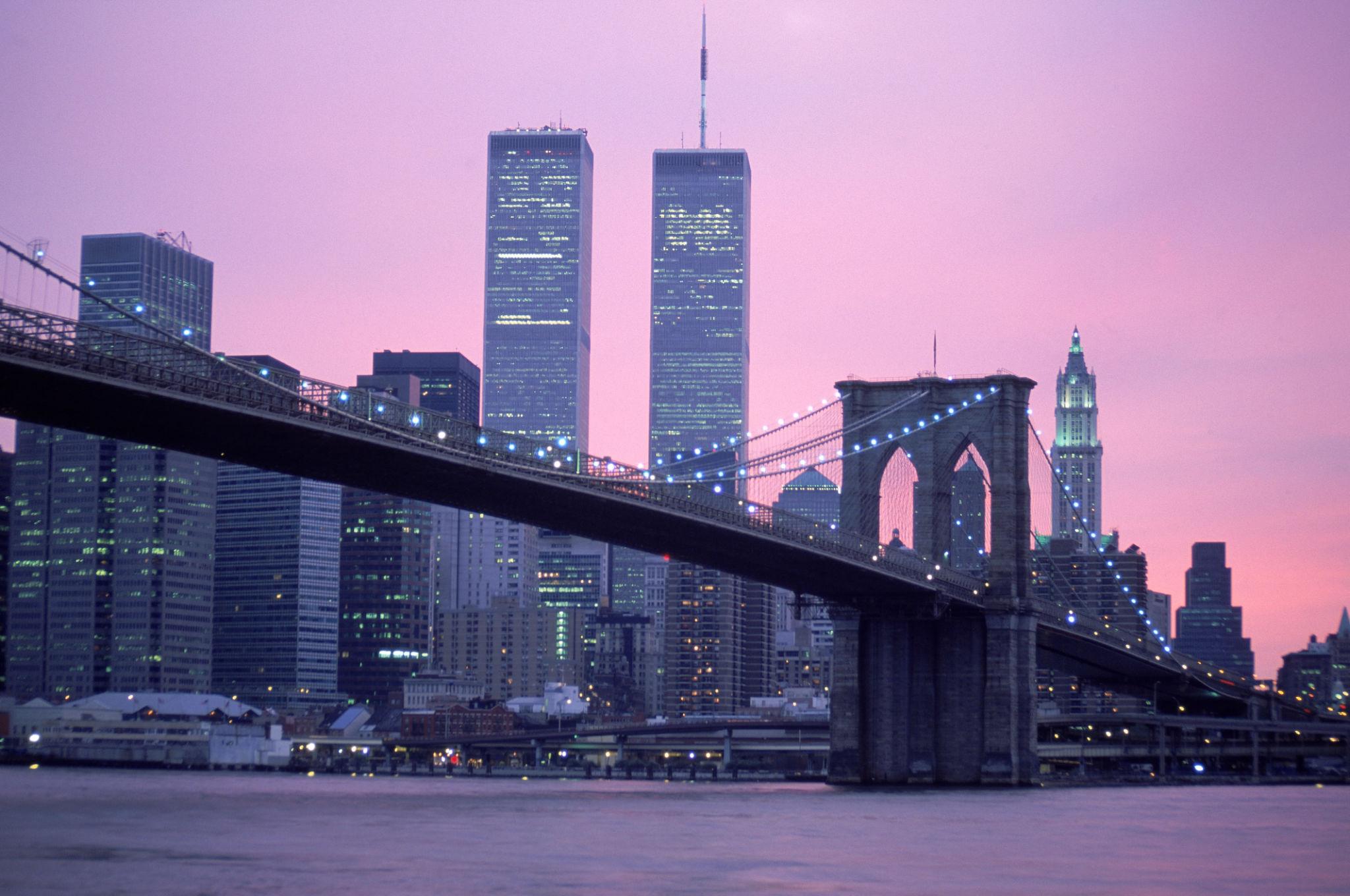
Le torri apparivano ovunque: nei film, nelle pubblicità, nelle cartoline, nei telegiornali, nell’immaginario collettivo mondiale.
Rappresentavano il capitalismo internazionale, la centralità finanziaria di New York, l’idea di un’America invincibile, la fiducia assoluta nel progresso.
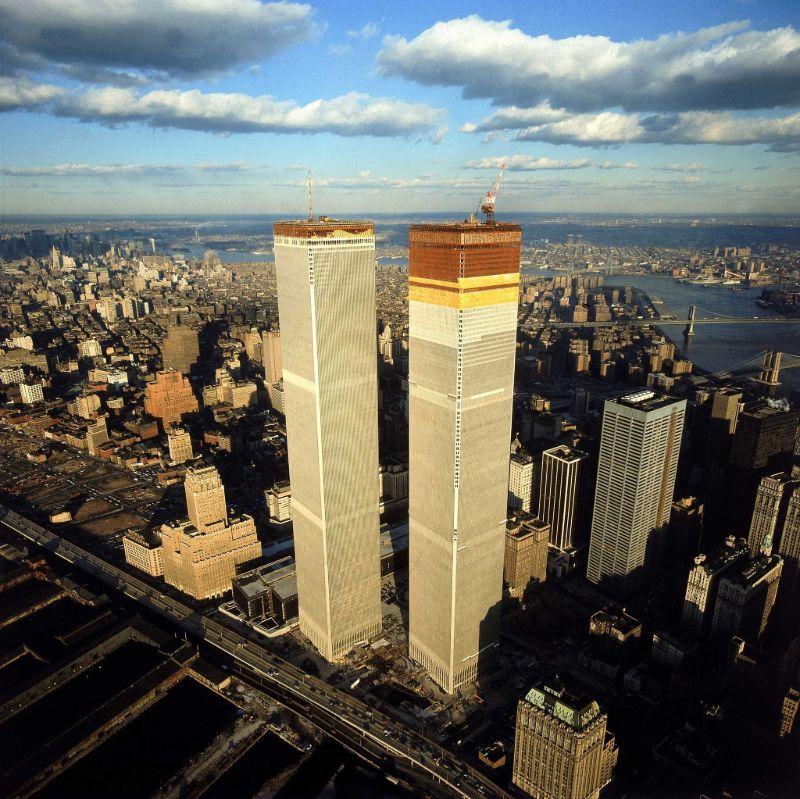
Per l’epoca erano quasi fantascientifiche. Due torri identiche alte oltre 410 metri, immense superfici d’acciaio e vetro, migliaia di uffici, ascensori ad alta velocità, spazi interni giganteschi.
Ma ciò che colpiva davvero era la loro presenza nello skyline. Le torri sembravano infinite. Persino il modo in cui erano costruite raccontava questa filosofia.
Le facciate ripetitive e modulari comunicavano ordine ed efficienza. Gli enormi open space interni riflettevano la logica aziendale moderna. Tutto era progettato per massimizzare produttività e funzionalità.
Anche la piazza tra le torri era figlia di quella cultura urbanistica: grande, monumentale, quasi astratta.
Più uno spazio scenografico che un luogo realmente vissuto dai cittadini.
In fondo, il World Trade Center era stato concepito soprattutto come una gigantesca macchina economica.
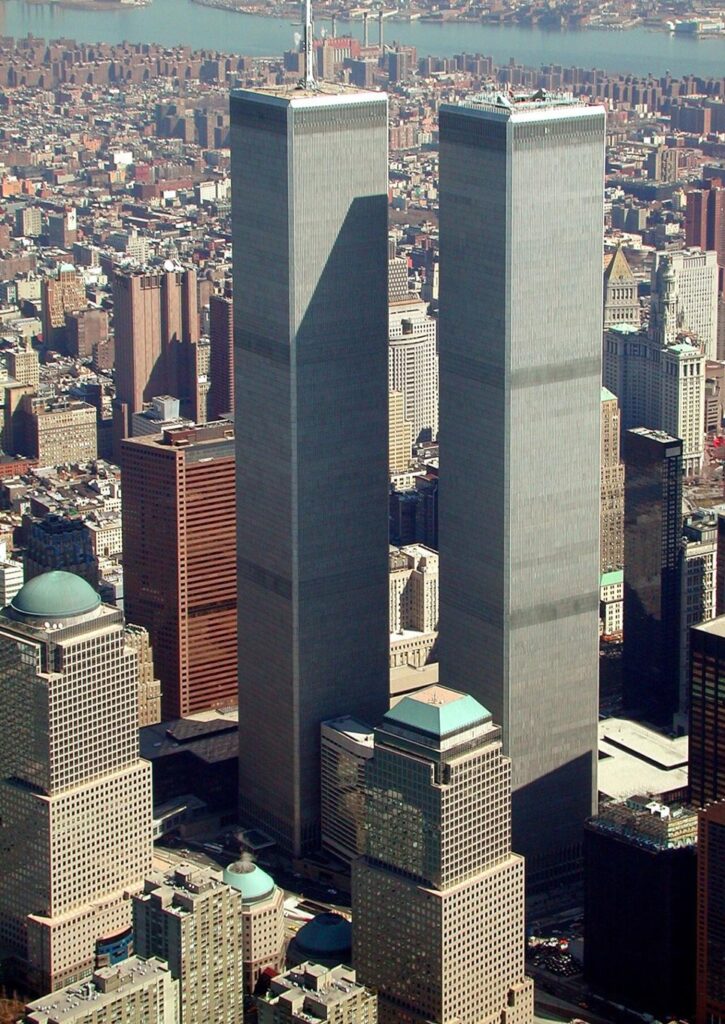
Twin Towers (Immagine reperita online; autore non identificato)
Gli attacchi terroristici dell’11 settembre 2001 provocarono il crollo delle torri e la morte di quasi 3.000 persone. Oltre alla tragedia umana, la città perse uno dei suoi simboli più riconoscibili.
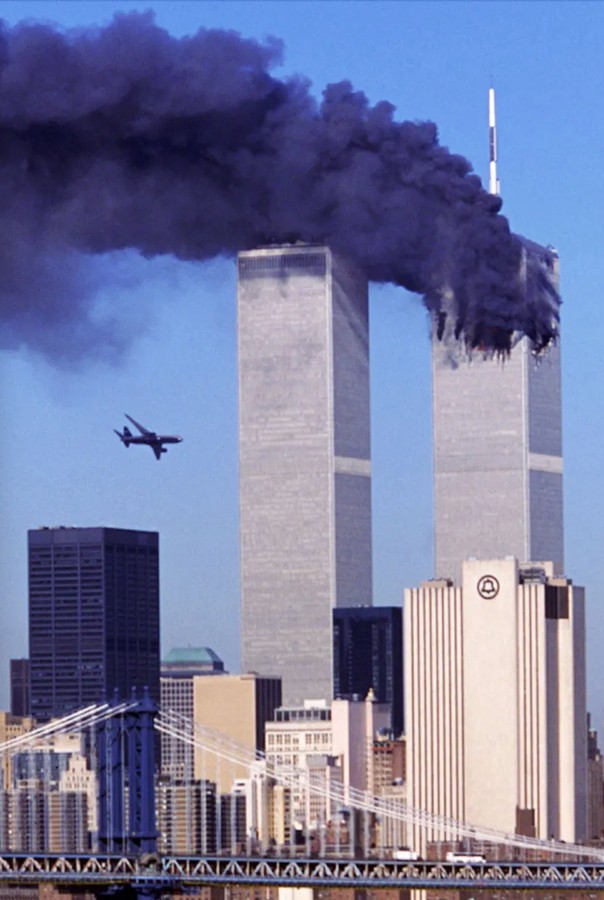
Attacchi dell’11 settembre 2001 (Immagine reperita online; autore non identificato)
Nei mesi successivi si aprì un intenso dibattito sul futuro del sito. La domanda centrale era complessa: come ricostruire senza cancellare la memoria? La soluzione non poteva limitarsi a sostituire gli edifici distrutti; occorreva creare un luogo capace di accogliere il dolore collettivo e, allo stesso tempo, restituire vitalità urbana a Lower Manhattan.
Il masterplan di Daniel Libeskind
Nel 2002 un concorso internazionale selezionò il progetto di Daniel Libeskind come base per la ricostruzione. La sua visione prevedeva la conservazione delle impronte delle torri originali, un grande spazio pubblico dedicato alla memoria, nuovi grattacieli simbolo del XXI secolo, una migliore integrazione urbana dell’area con il resto di Manhattan. (per approfondimentohttps://www.giusybaffi.com/daniel-libeskind-archistar-del-nostro-tempo/ )
Sebbene il progetto abbia subito molte modifiche nel tempo, l’idea fondamentale è rimasta intatta: trasformare Ground Zero in un luogo dove memoria e futuro potessero convivere.
One World Trade Center: il nuovo faro dello skyline
Il cuore del nuovo complesso è il One World Trade Center, progettato principalmente da David Childs (1941-2025) dello studio Skidmore, Owings & Merrill e inaugurato nel 2014.
L’edificio raggiunge l’altezza simbolica di 1.776 piedi (541 metri), un richiamo diretto all’anno della Dichiarazione d’Indipendenza americana. La torre non replica le Twin Towers, ma propone un linguaggio architettonico contemporaneo: una forma prismatica e la progressiva torsione del volume che si delinea da una base massiccia e sicura trasformandosi progressivamente in una superficie vetrata. luminosa e dinamica.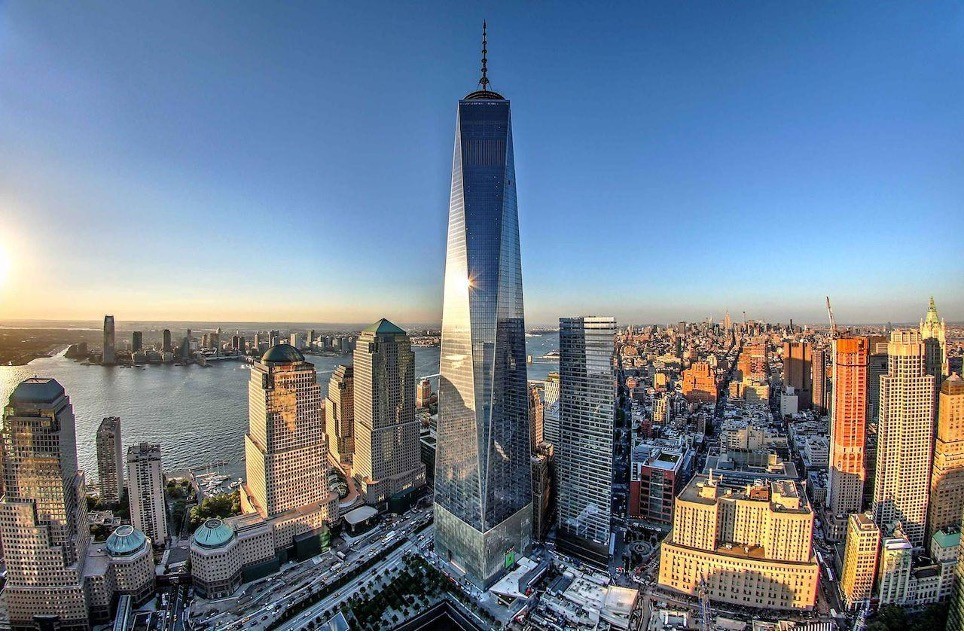
Skidmore, Owings & Merrill (SOM), One World Trade Center, New York, USA 2014. Courtesy SOM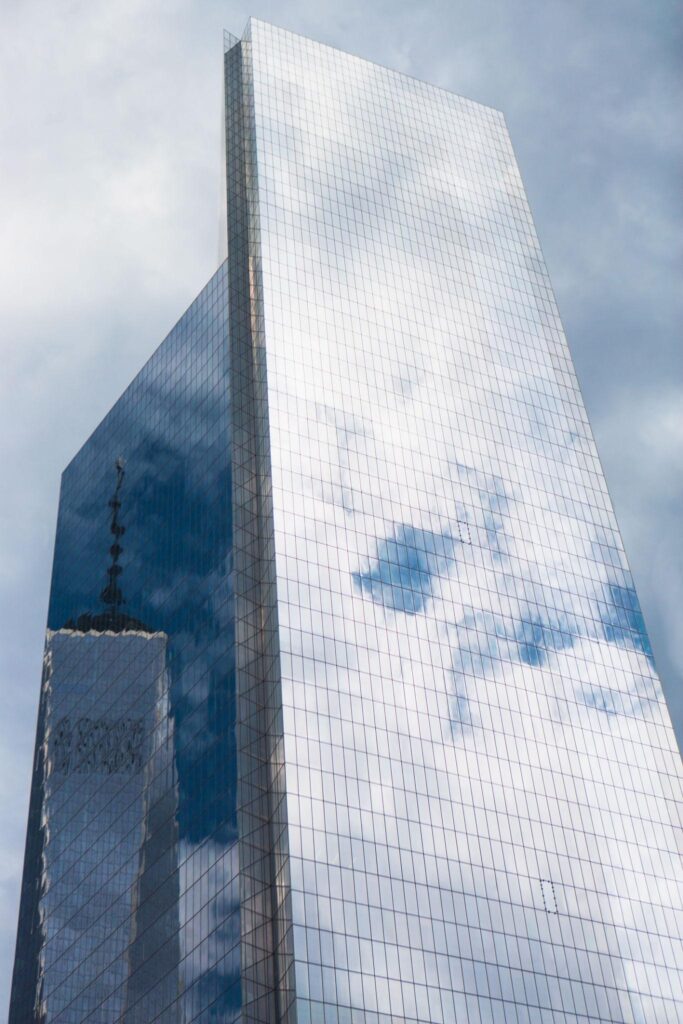
(Immagine reperita online; autore non identificato)
One World Trade Center è oggi il grattacielo più alto dell’emisfero occidentale e rappresenta il nuovo emblema di New York, non come sostituzione del passato, ma come segno di rinascita.
Reflecting Absence: la memoria trasformata in paesaggio
L’elemento più toccante dell’intero progetto è il memoriale Reflecting Absence, ideato dall’architetto Michael Arad insieme al paesaggista Peter Walker.
Il memoriale occupa esattamente le impronte delle due torri distrutte. Due immense vasche quadrate, attraversate da cascate continue, sprofondano verso un vuoto centrale.
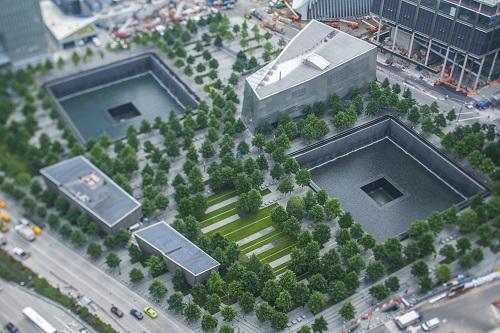
(Immagine reperita online; autore non identificato)
L’acqua scorre senza sosta, creando un effetto di meditazione e assenza che dà il nome all’opera. L’idea di Arad non era riempire l’assenza, ma renderla visibile. Le vasche non celebrano la monumentalità delle torri perdute; al contrario, trasformano il loro vuoto in un’esperienza sensoriale e collettiva.
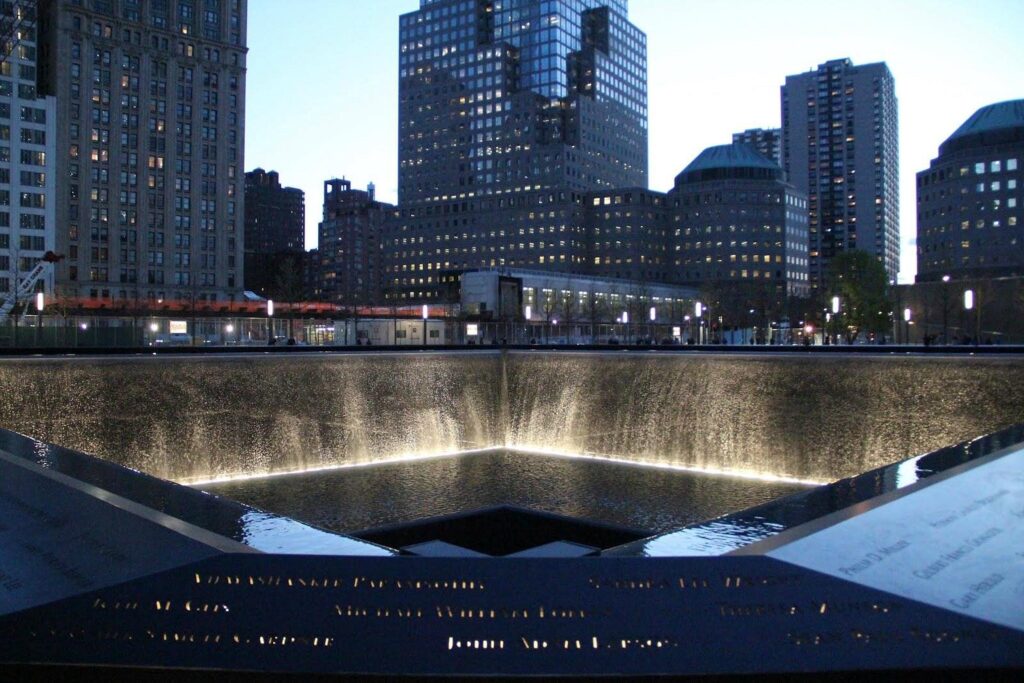
(Immagine reperita online; autore non identificato)
I nomi delle vittime dell’11 settembre 2001 sono incisi sui parapetti in bronzo che circondano le vasche. Il risultato è uno spazio pubblico di straordinaria intensità emotiva, dove il vuoto diventa parte integrante dell’architettura.
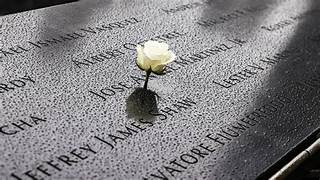
(Immagine reperita online; autore non identificato)
Accanto al memoriale si trova il Museo dell’11 Settembre che conserva reperti, testimonianze e documenti degli eventi.
L’Oculus di Santiago Calatrava: infrastruttura e simbolo
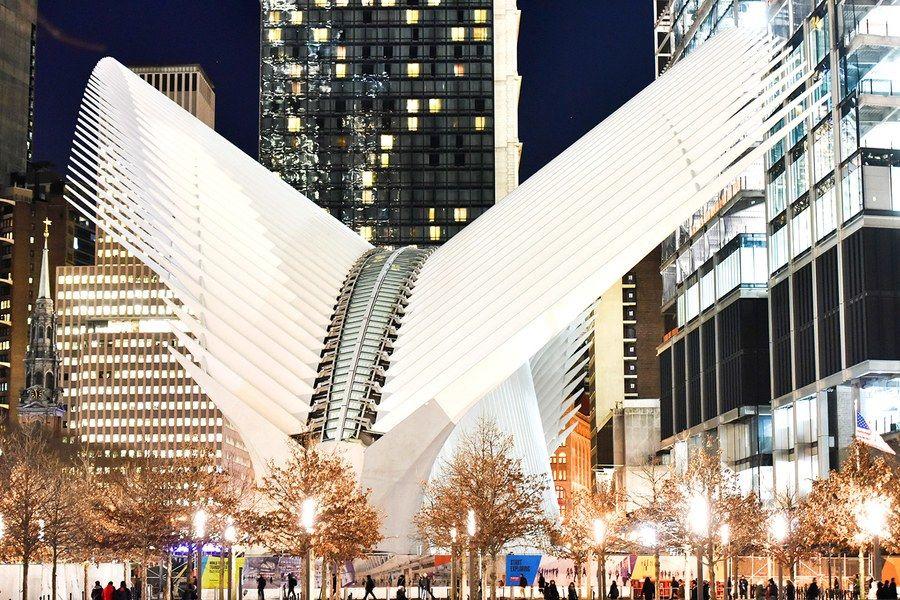
Tra le opere più spettacolari del nuovo World Trade Center spicca l’Oculus, il terminal di trasporto progettato dall’architetto e ingegnere spagnolo Santiago Calatrava. (Per approfondire: https://www.giusybaffi.com/santiago-calatrava-la-poetica-del-movimento/ )
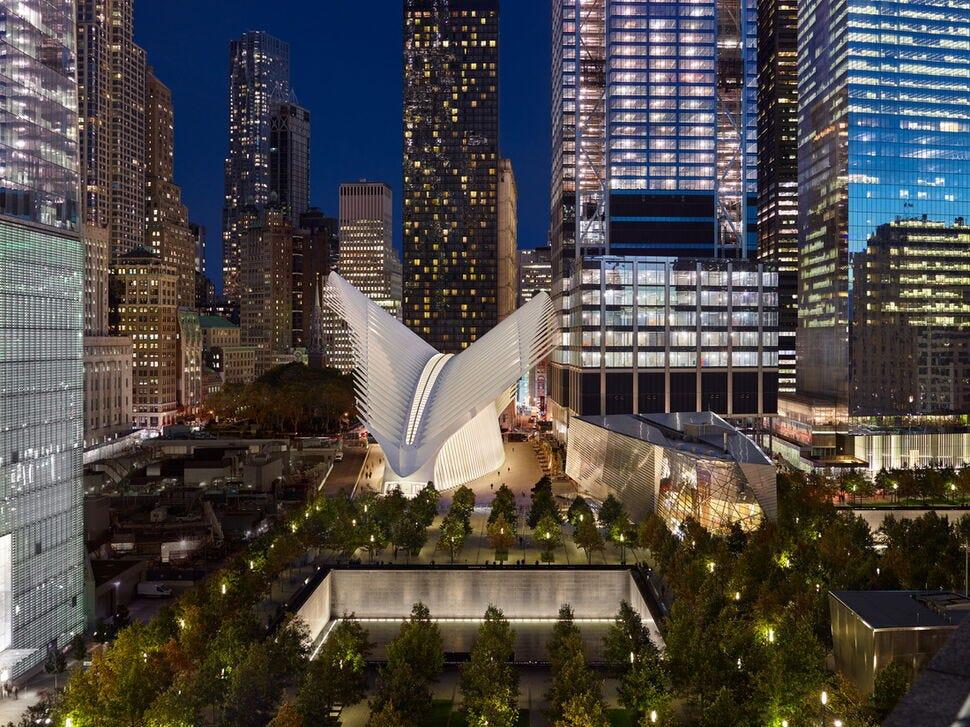
(Immagine reperita online; autore non identificato)
Inaugurato nel 2016, l’Oculus collega diverse linee della metropolitana e i treni PATH verso il New Jersey, fungendo da snodo fondamentale per la mobilità urbana. Ma la sua importanza va oltre la funzione pratica.
Calatrava immaginò l’edificio come “un uccello liberato dalle mani di un bambino”, una forma bianca e luminosa che si apre verso il cielo.
(Immagine reperita online; autore non identificato)
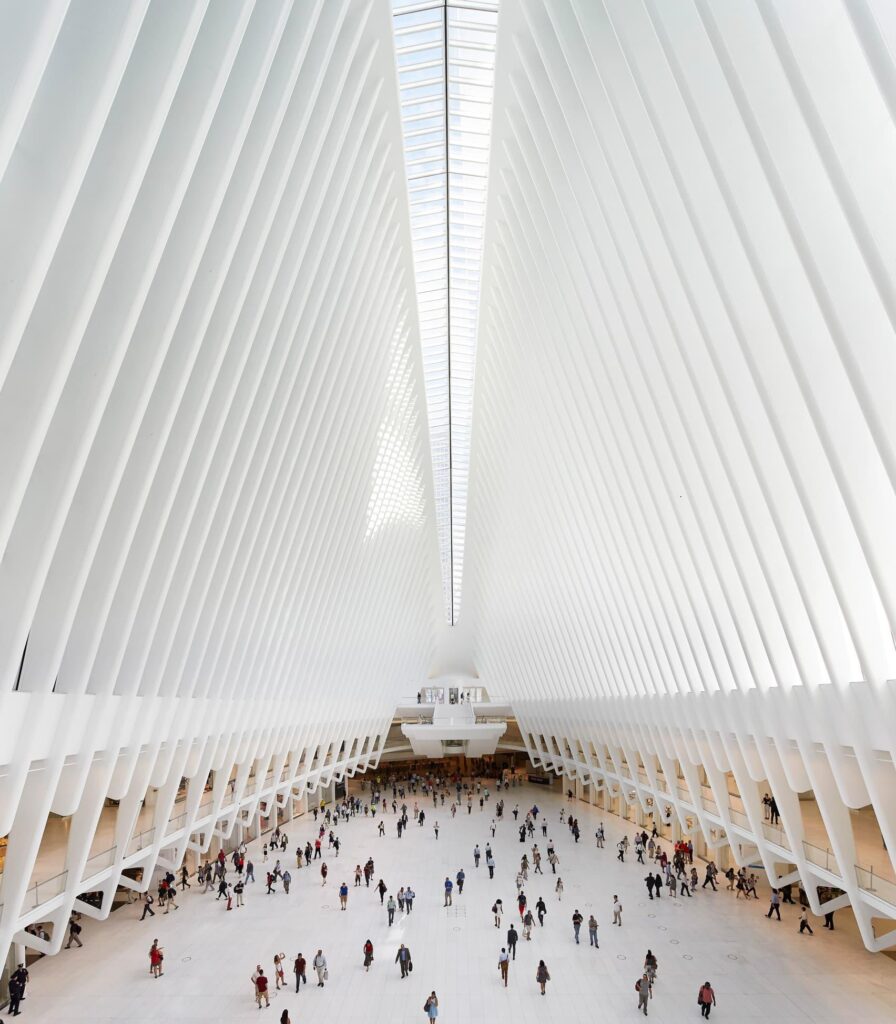
Le nervature strutturali ricordano ali spiegate, mentre la grande navata centrale inonda l’interno di luce naturale.
(Immagine reperita online; autore non identificato)
L’Oculus rappresenta la dimensione più ottimistica della ricostruzione: movimento, apertura, connessione. In un sito segnato dalla tragedia, l’architettura di Calatrava introduce un senso di leggerezza e rinascita.
Non sono mancate le critiche per i costi elevati e la complessità costruttiva dell’opera, ma il terminal è diventato rapidamente uno dei luoghi più fotografati di New York e un nuovo landmark urbano.
Una nuova centralità per Lower Manhattan
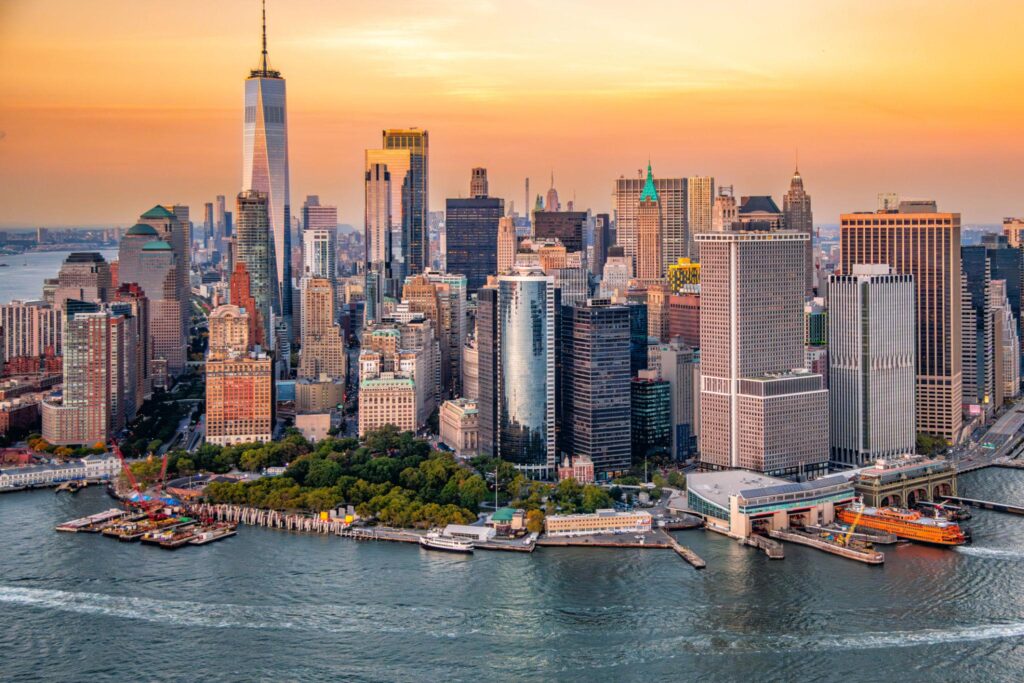
La trasformazione del World Trade Center ha ridefinito l’intero quartiere di Lower Manhattan. Oltre ai nuovi grattacieli e agli spazi commemorativi, il progetto ha migliorato i collegamenti di trasporto pubblico, la qualità degli spazi pedonali, la presenza di aree verdi e piazze pubbliche, l’integrazione tra funzioni finanziarie, culturali e turistiche.
Ground Zero è diventato un luogo vissuto quotidianamente da lavoratori, residenti e visitatori, non solo un memoriale statico.
Architettura, memoria e resilienza
Dalle Twin Towers al nuovo World Trade Center, New York ha compiuto un percorso che va ben oltre la ricostruzione edilizia. Ha trasformato una ferita collettiva in un progetto urbano capace di guardare al futuro senza dimenticare il passato.
Oggi il sito è insieme memoriale, centro finanziario, nodo di trasporto e destinazione culturale. Un luogo dove il vuoto delle torri perdute continua a essere percepibile, ma dove nuove architetture — dal One World Trade Center all’Oculus — testimoniano la capacità della città di reinventarsi e continuare a vivere.
L’opera di Michael Arad trasforma l’assenza in memoria condivisa; quella di Calatrava restituisce movimento e luce a un luogo ferito.
Queste architetture compongono un racconto di resilienza urbana che ha pochi precedenti nella storia contemporanea.
(Immagine reperita online; autore non identificato)
© Giusy Baffi – Giugno 2026
© Le foto sono state reperite da libri, cataloghi o in rete e possono essere soggette a copyright. L’uso delle immagini e dei video sono esclusivamente a scopo esplicativo. L’intento di questo blog è solo didattico e informativo. Qualora la pubblicazione delle immagini violasse eventuali diritti d’autore si prega di volerlo comunicare via email a info@giusybaffi.com e saranno prontamente rimosse oppure citato il copyright ©. Il rispetto del diritto d’autore rappresenta un principio fondamentale per questo sito.
© Il presente sito https://giusybaffi.com/ non è a scopo di lucro e qualsiasi sfruttamento, riproduzione, duplicazione, copiatura o distribuzione dei Contenuti del Sito per fini commerciali è vietata.
©Photos have been sourced from books and catalogs or online and may be subject to copyright. The use of images and videos are for explanatory purposes only. This website and blog claim no credit for any image posted unless otherwise noted. Images on this website and blog are copyrighted to its respectful owners. If there is an image appearing on this blog and website that belongs to you and do not wish for it to appear on this site, please email to info@giusybaffi.com and it will be promptly removed or copyright © cited. Respect for copyright is a core principle of this website.
© This site https://giusybaffi.com/ is not for profit and any exploitation, reproduction, duplication, copying or distribution of the Site Content for commercial purposes is prohibited.