Within the realm of contemporary art, few artists have forged as deep and compelling a connection between humanity and the natural world as John Grade. Internationally acclaimed for his large-scale sculptures, the American artist draws inspiration from close observation of nature, transforming its cycles of growth, change, and decay into powerful visual experiences.
His installations are far more than representations of natural forms. They are dynamic works that evolve over time, mirroring the living processes of the ecosystems that inspire them. Through this constant transformation, Grade invites viewers to reflect on the intricate relationship between people, time, and the environment.
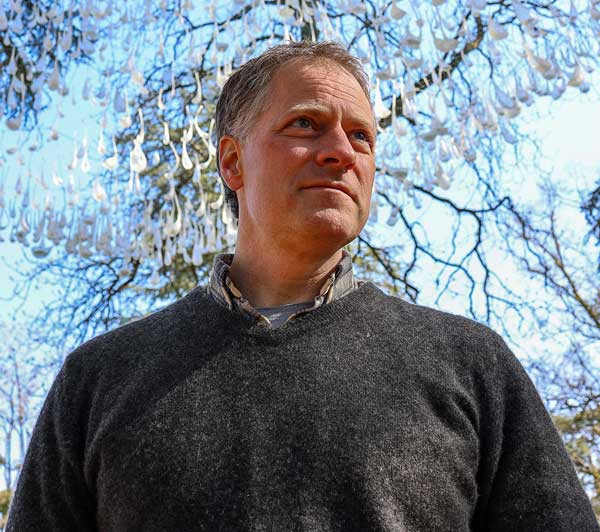
John Grade ©Photo: Blake Brown 2022 ©John Grade
An Artist Inspired by Natural Processes
Born in 1970 in Minneapolis and raised in the state of Washington, John Grade developed a deep connection to the natural landscapes of North America from an early age. This bond became the foundation of his artistic practice, which explores the mechanisms that govern ecosystems and the transformations of matter.
Unlike many traditional sculptors, Grade does not seek to impose a fixed or final form on his works. Instead, his sculptures are conceived as living organisms in a constant state of evolution, capable of changing over time through their interaction with weather, gravity, and even the participation of the public.
Sculptures as Living Ecosystems
One of the most compelling aspects of John Grade’s practice lies in his creative process. Rather than inventing forms from scratch, he begins with direct observation and replication of the natural world. Trees, forest fragments, and other organic elements often serve as the starting point for his work, which is rooted in careful study rather than abstraction.
Grade frequently relies on sophisticated 3D scanning technology to record the intricate details of trees, trunks, roots, and other natural forms with extraordinary accuracy. These digital mappings are then transformed into large-scale sculptural installations, constructed from materials such as wood, bamboo, metal, and other organic components. The result is not a simple reproduction of nature, but a reimagining of its structures and processes on a monumental scale.
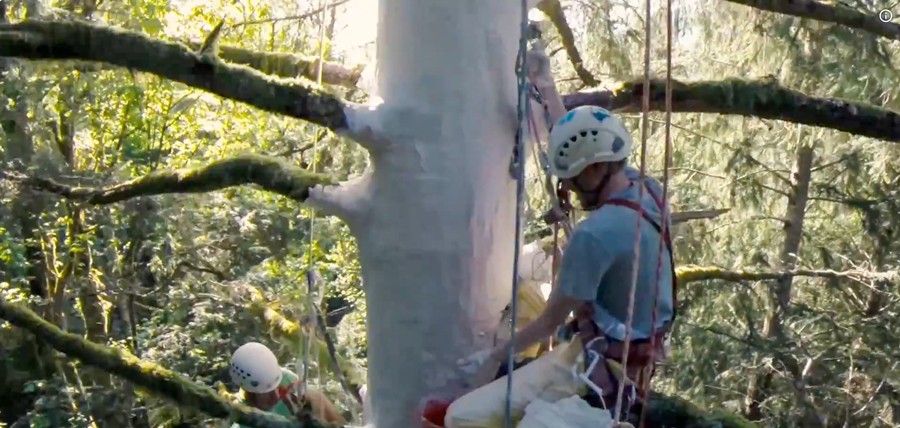
Stages of the tree casting for Middle Fork. © copyright John Grade
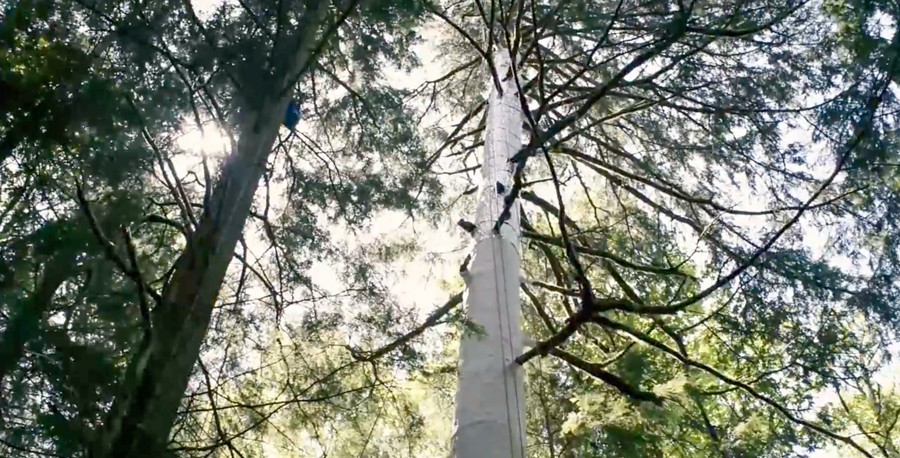
Complete cast of the tree for Middle Fork © copyright John Grade
The outcome is not a mere replica of nature, but a reinterpretation that magnifies its complexity and reveals its hidden beauty. It is as if Grade were translating a fragment of the forest into a new material language while preserving the essence and memory of its original form. His sculptures occupy a liminal space between the organic and the constructed, the natural and the man-made, evoking a profound sense of wonder. In doing so, they invite viewers into an experience that is both emotionally resonant and perceptually transformative.
Middle Fork: The Work That Captivated the Public
Among John Grade’s most celebrated works is Middle Fork, a monumental installation created from a detailed scan of an ancient hemlock tree located in Washington State.
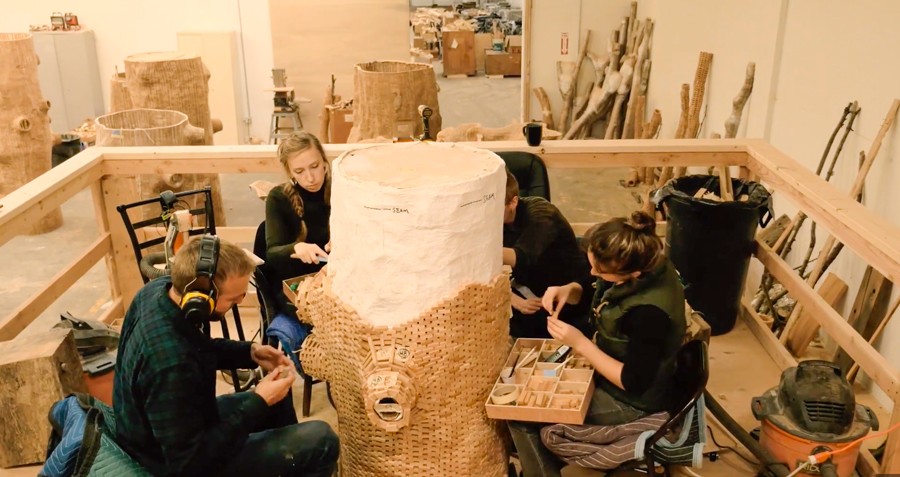
Assembly stages of Middle Fork © copyright John Grade
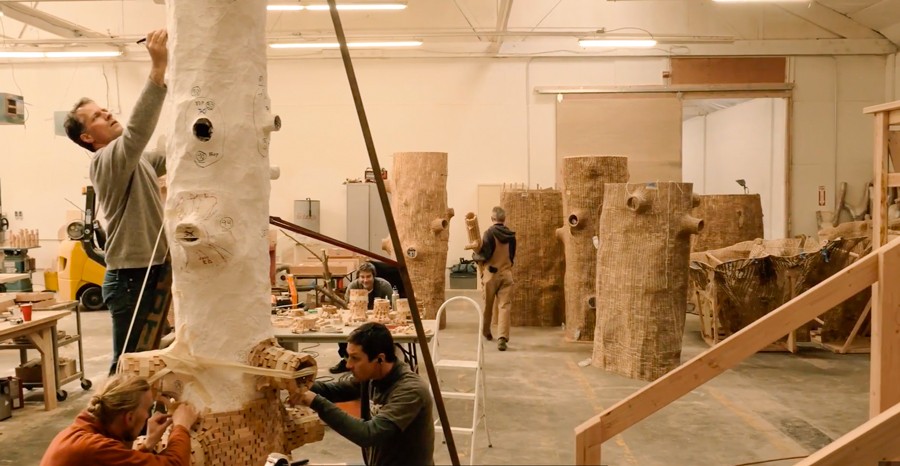
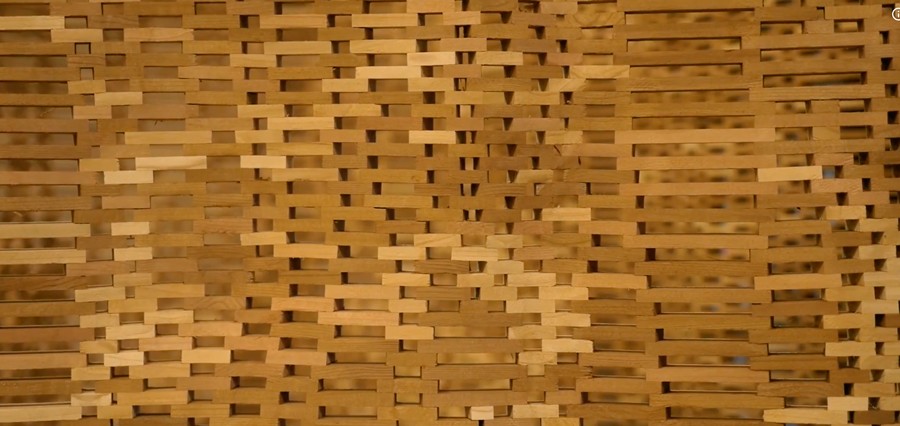
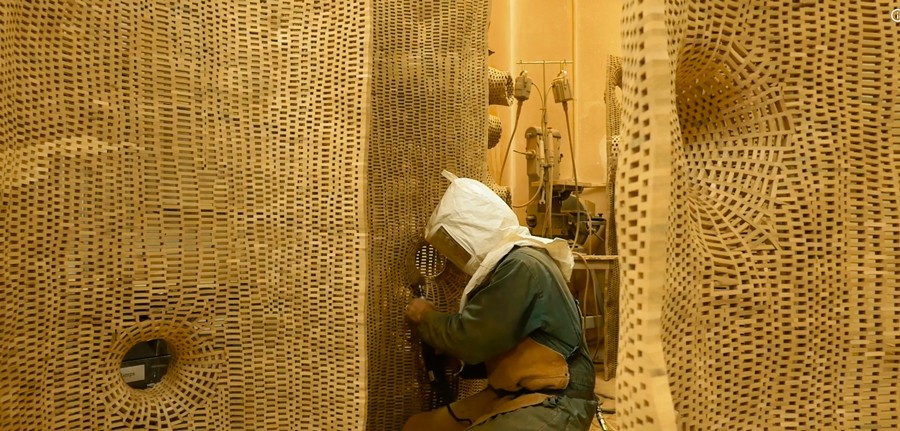
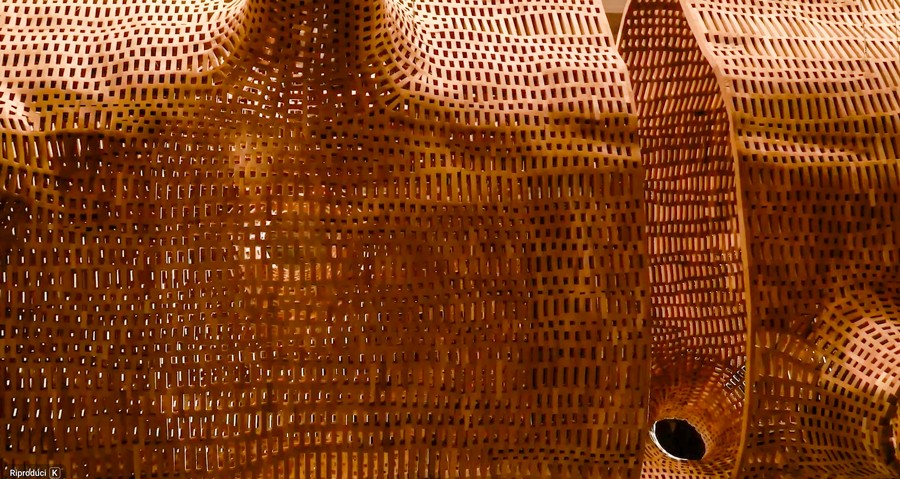
The work consists of thousands of wooden components, carefully assembled by a large team of volunteers and collaborators, to recreate the tree’s form at an extraordinary scale. First presented at the Renwick Gallery of the Smithsonian American Art Museum, the installation captivated audiences with its ability to bring the presence and grandeur of the natural world into the heart of a museum environment.
What makes Middle Fork especially compelling is the way the project was conceived to continue beyond the exhibition itself. Once the show concluded, the sculpture was dismantled and its individual elements were returned to various natural landscapes, where they were left to slowly decay and become part of the ecosystem once again. In this way, the work embraced the very cycles of change, impermanence, and renewal that lie at the core of Grade’s artistic vision.
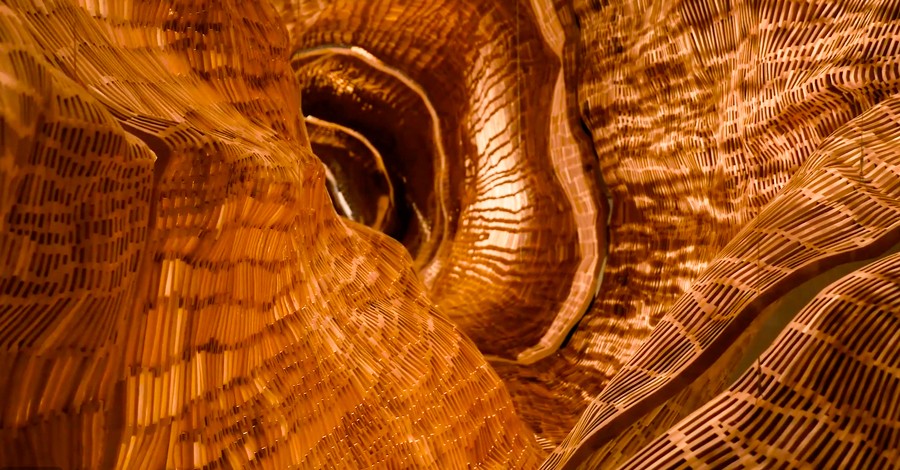
Middle Fork (detail of the base) © John Grade
Reservoir: A Sculpture That Lives with the Rain
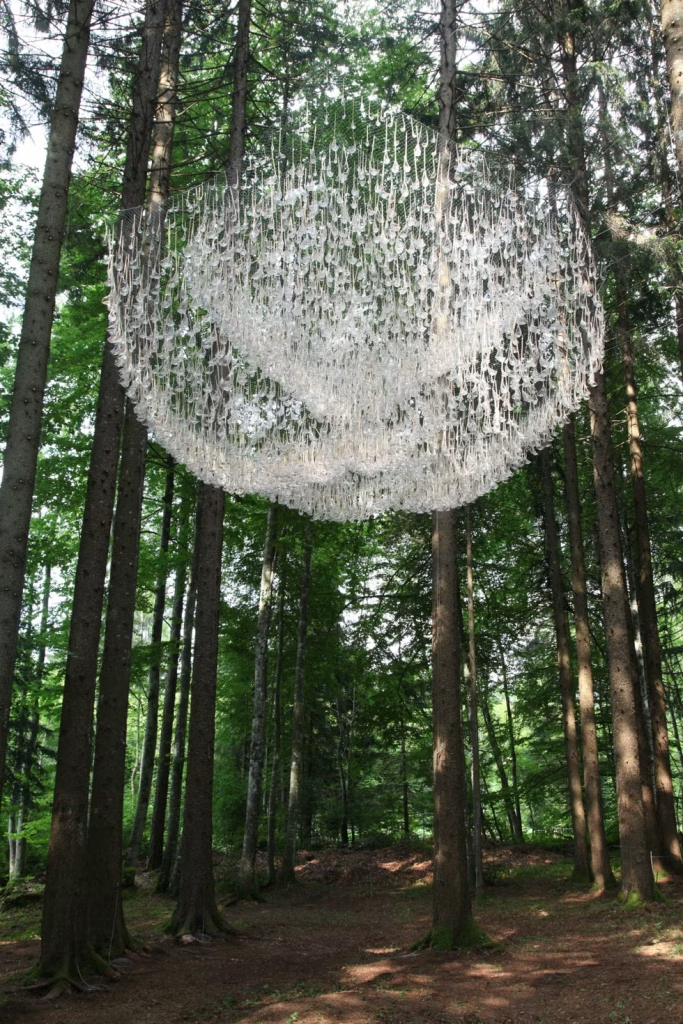
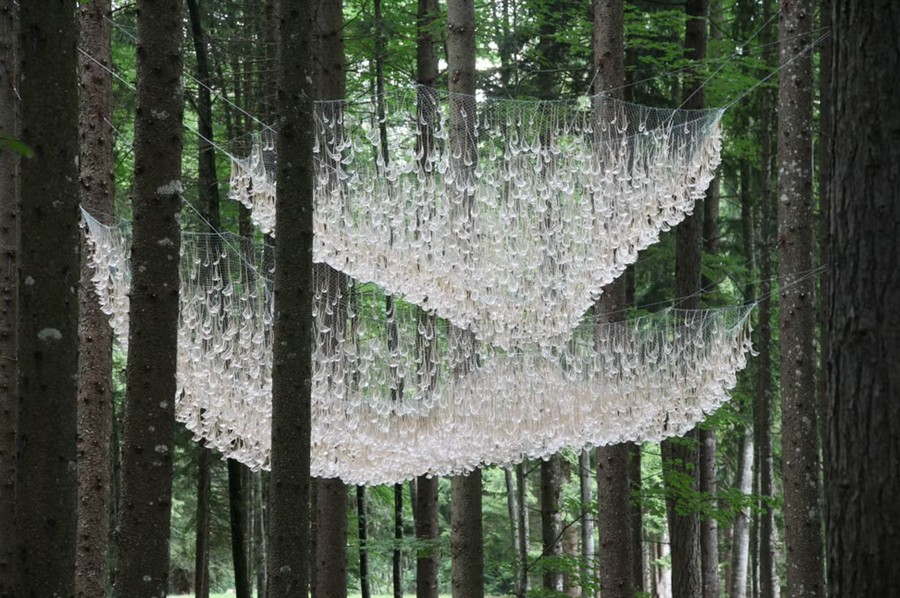
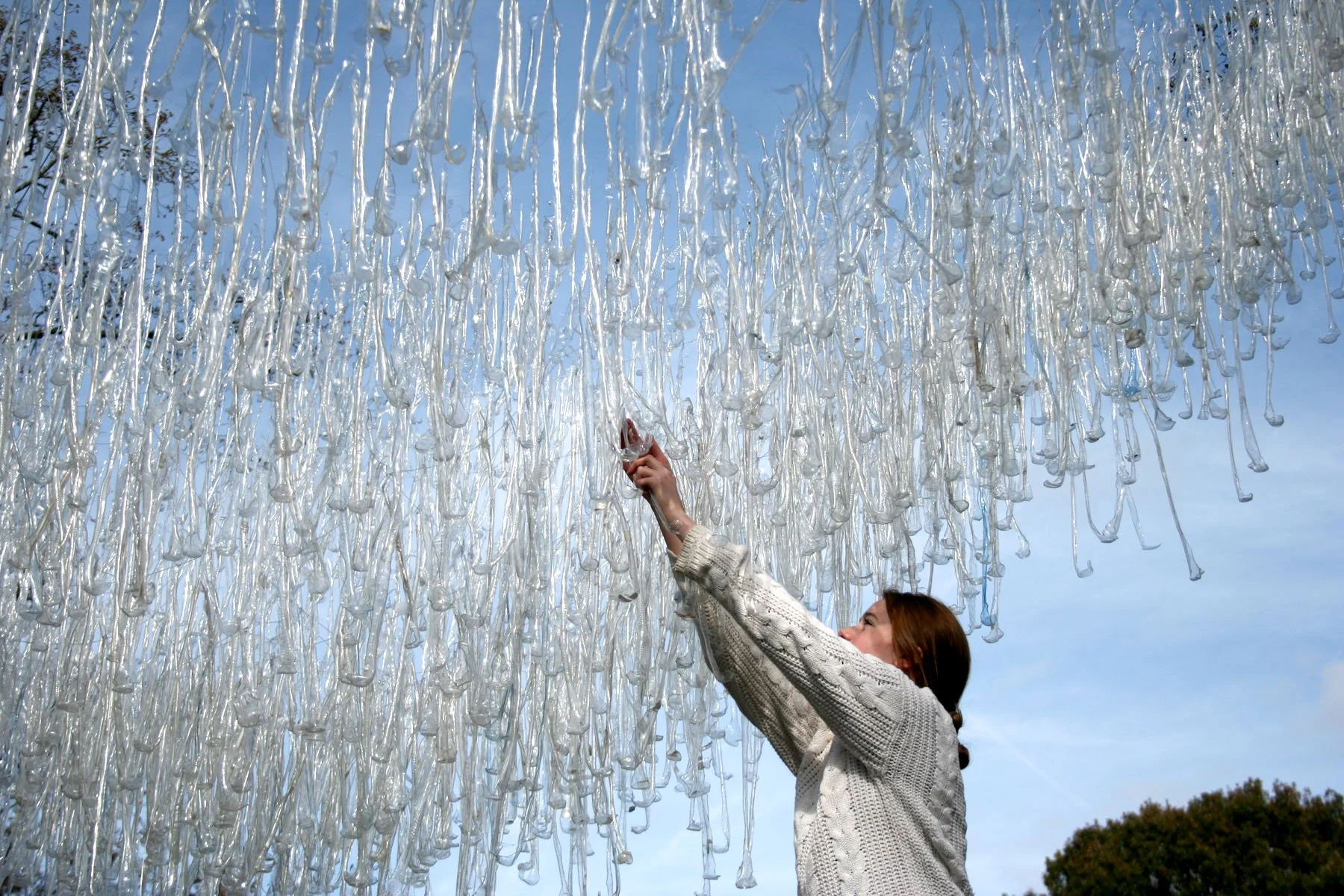
Among John Grade’s most innovative works is Reservoir, created in 2018 for the sculpture park Arte Sella in Trentino, Italy. Suspended between the trees of a forest clearing, the installation resembles a giant cloud or an organic chandelier floating among the woodland canopy. What makes the work unique is its ability to change continuously in response to the weather.
The sculpture is composed of around five thousand transparent droplets, each individually heat-formed and attached to a network suspended between the surrounding trees.
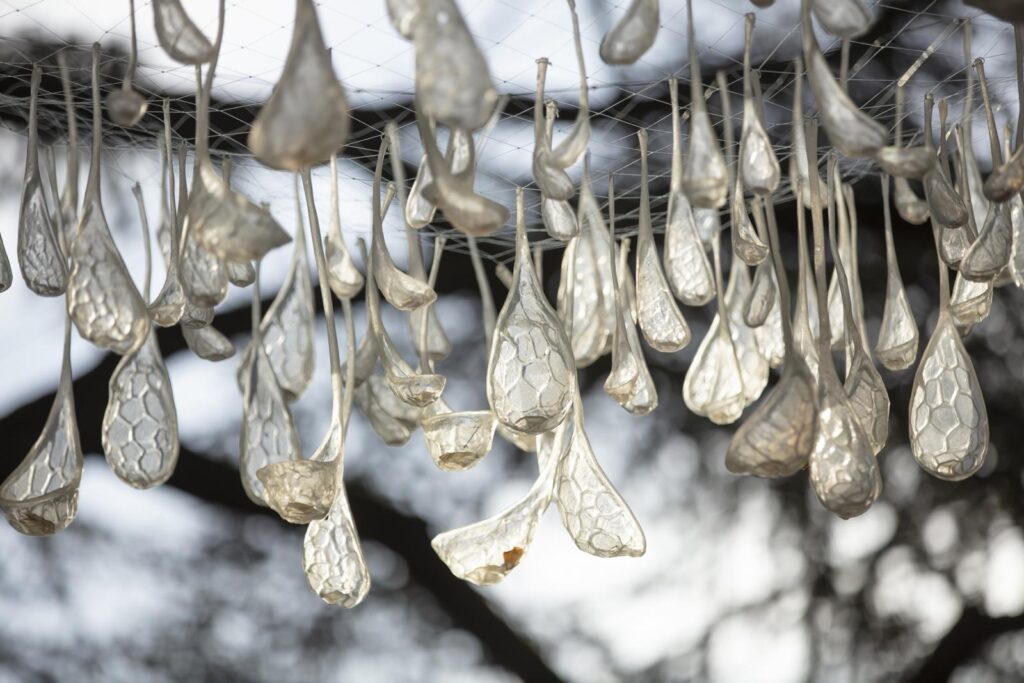
Designed to collect rainwater and snow, these elements allow the work to react directly to environmental conditions.
As water accumulates, the increasing weight causes the structure to descend gradually, altering its shape and appearance. When the rain stops and the water evaporates, the sculpture slowly rises back toward its original position. In this way, Reservoir makes visible natural processes that often go unnoticed, turning climate into an active force within the artwork.
Grade has explained that the project was inspired by the way rain filters through the forest canopy and by the quiet atmosphere that settles over the woods during a storm. His aim was not simply to create a sculpture to be viewed, but to develop a work capable of interacting with its surroundings and responding to the rhythms of nature.
Reservoir perfectly reflects the artist’s approach to sculpture. Rather than imposing a fixed form on the natural world, the work allows itself to be shaped by it. Rain, evaporation, wind, and the passage of time become essential elements of the creative process, transforming the sculpture into a living work in constant change.
©John Grade
and the passage of time become essential elements of the creative process, transforming the sculpture into a living work in constant change.
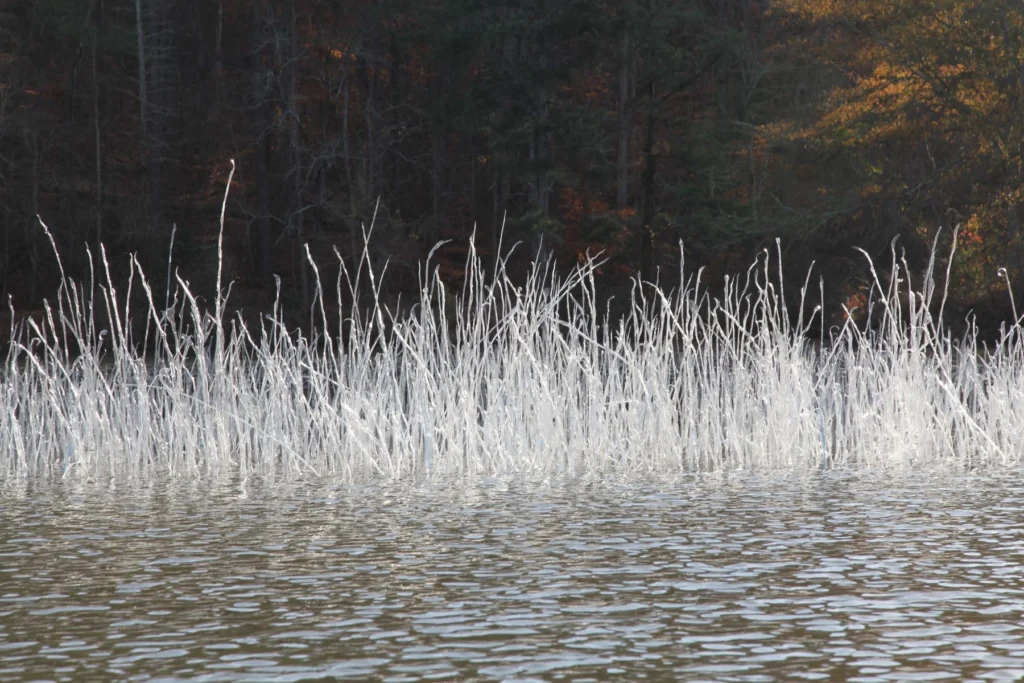
Piedmont Divide © John Grade – Emory University Lake Chandler – strips of recycled plastic
In an era shaped by environmental challenges and a growing ecological awareness, the work of John Grade takes on particular significance. His sculptures invite us to see nature not as a resource to be exploited, but as a complex system of which human beings are an integral part.
From Middle Fork to Reservoir, his practice demonstrates how art can become a means of reflecting on our relationship with the environment, encouraging us to recognize the beauty inherent in the processes of change that define life itself.
Through monumental and poetic forms, the artist reminds us that every element of the natural world is connected to a broader network of relationships and transformations.
Giusy Baffi – June 2026
©Photos have been sourced from books and catalogs or online and may be subject to copyright. The use of images and videos are for explanatory purposes only. This website and blog claim no credit for any image posted unless otherwise noted. Images on this website and blog are copyrighted to its respectful owners. If there is an image appearing on this blog and website that belongs to you and do not wish for it to appear on this site, please email to info@giusybaffi.com and it will be promptly removed or copyright © cited.
© This site https://giusybaffi.com/ is not for profit and any exploitation, reproduction, duplication, copying or distribution of the Site Content for commercial purposes is prohibited.