The stylistic signature of the great Zaha Hadid is always perfectly recognizable in the fluidity and uniqueness of forms, in the lightness of the interiors that seem emptied, carved into the material, and connected to each other by suspended walkways. Upon her death, Zaha Hadid left behind a considerable number of ongoing projects. Her architecture firm, Zaha Hadid Architects (ZHA), whose leadership passed to her partner Patrik Schumacher, is successfully carrying forward her projects.
“I design powerful, mutable, fluid forms, and I always think about the effect they would have if they were floating in space.” – Zaha Hadid
The year 2019 marked the inauguration in Beijing of two significant structures designed by Zaha Hadid before her sudden death in 2016, and completed by the ZHA group (Zaha Hadid Architects): Daxing International Airport and the Leeza Soho Tower. Both projects were realized using BIM (*).
DAXING INTERNATIONAL AIRPORT
Inaugurated on September 25, 2019, Beijing’s Daxing International Airport has the world’s largest terminal, equivalent to 98 soccer fields spread over an area of 700,000 square meters.
Immediately transforming into a new iconic building on Beijing’s skyline, when viewed from above, it resembles a starfish that evokes the principles of traditional Chinese architecture. The six arms converging towards a large central courtyard create interconnected spaces, allowing passengers to move seamlessly through all areas of the structure.
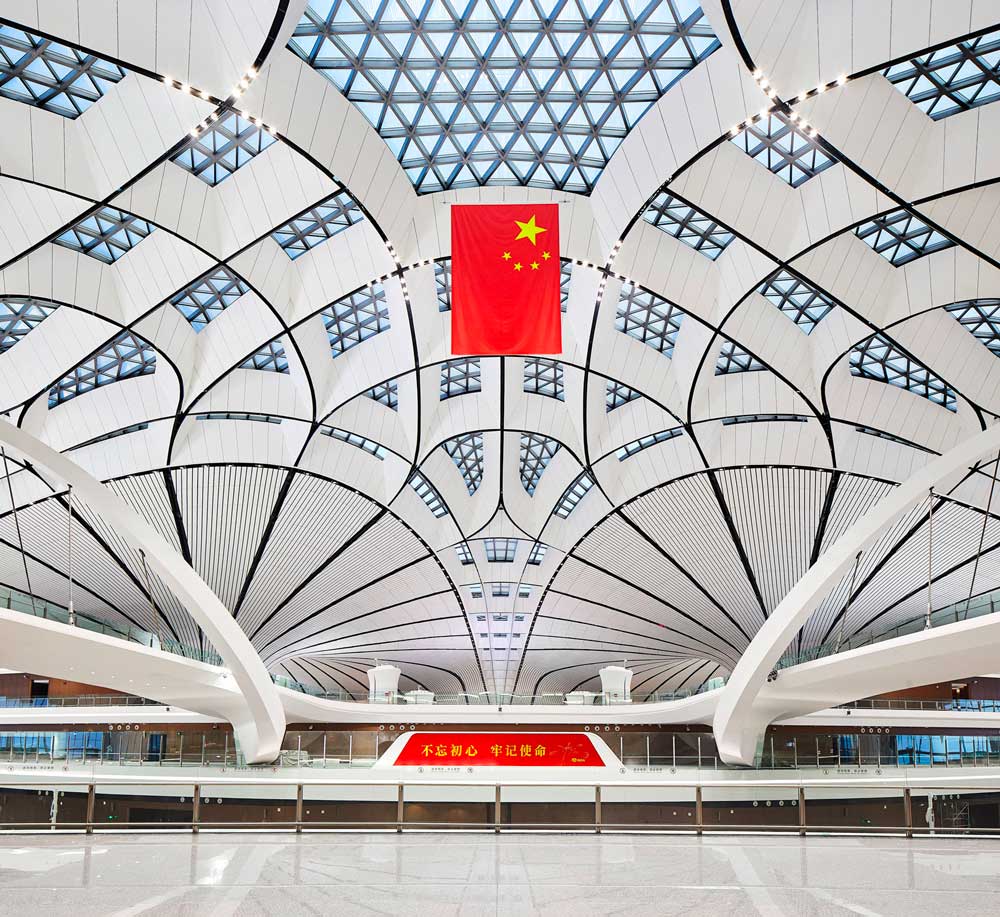
From the central part, five terminals extend with 79 gates to serve the aircraft; the central courtyard is illuminated by a transparent glass dome.
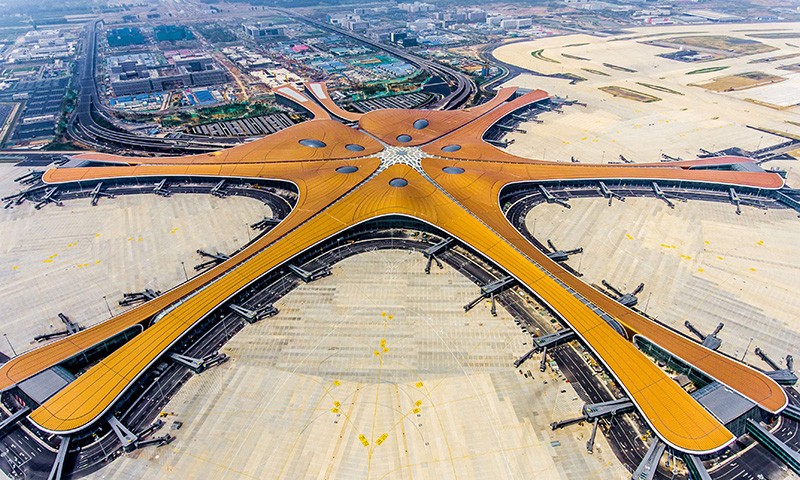
Daxing International Airport – 2019 – Pechino ©ZHA ©photo by AFP/LaPresse
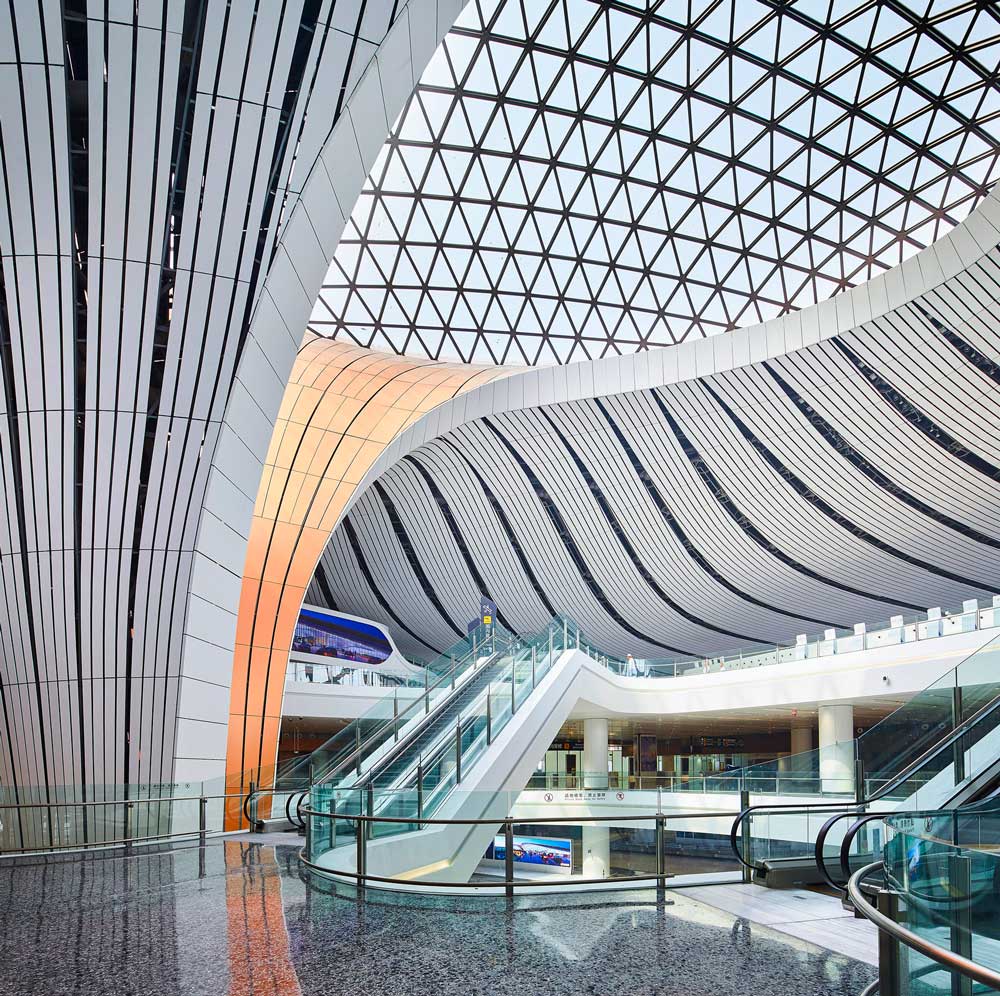
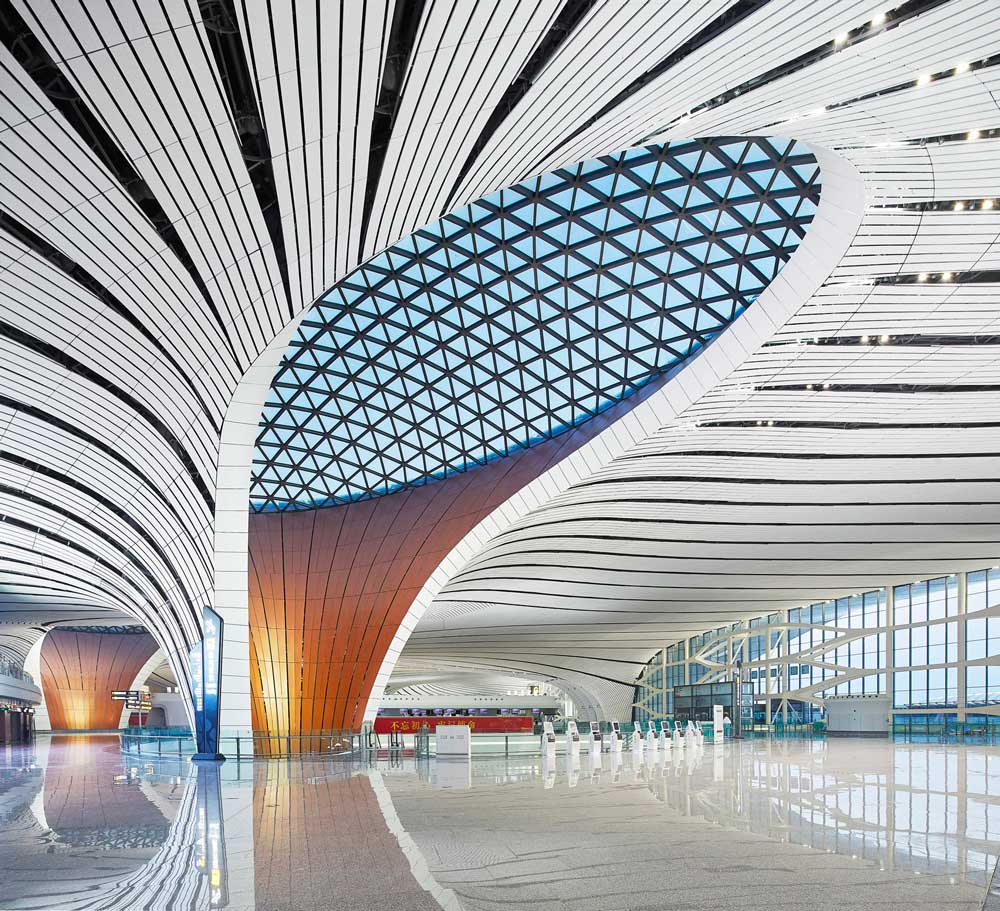
Natural light enters the terminal through a network of linear skylights, providing an intuitive system of pathways within the complex.
Daxing International Airport – 2019 – Pechino ©ZHA ©photo by Hufton+Crow
Daxing International Airport - 2019 - Pechino ©ZHA ©photo by Hufton+Crow
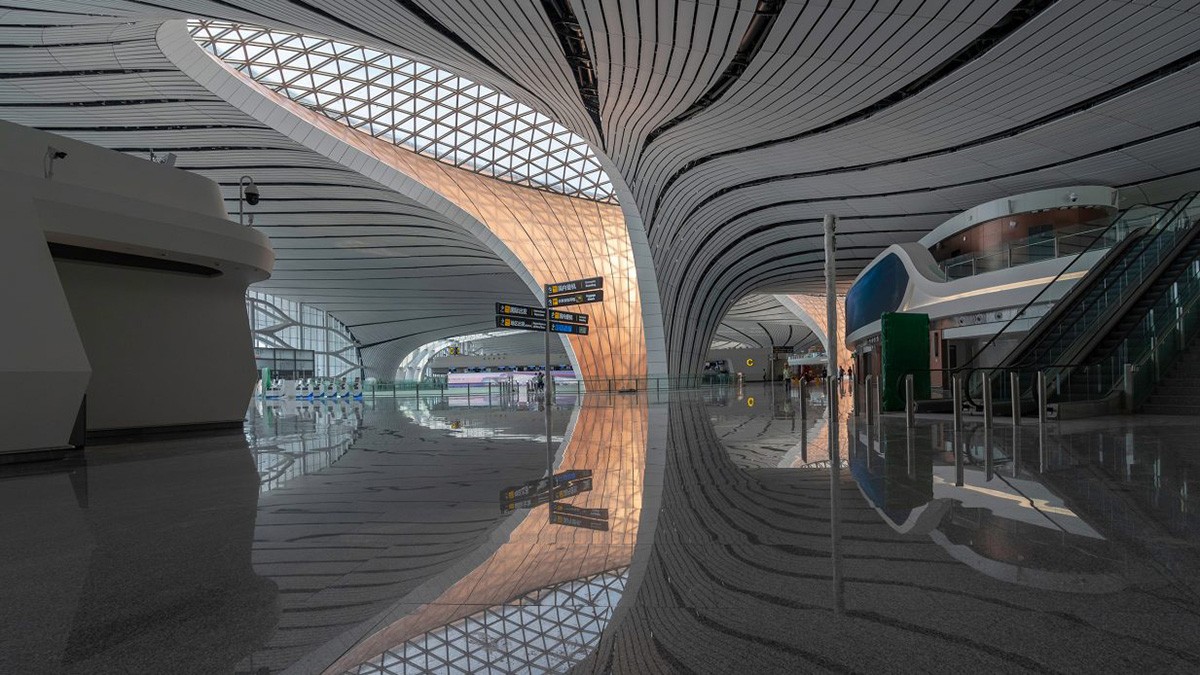
Daxing International Airport - 2019 - Pechino ©ZHA ©photoCGTN
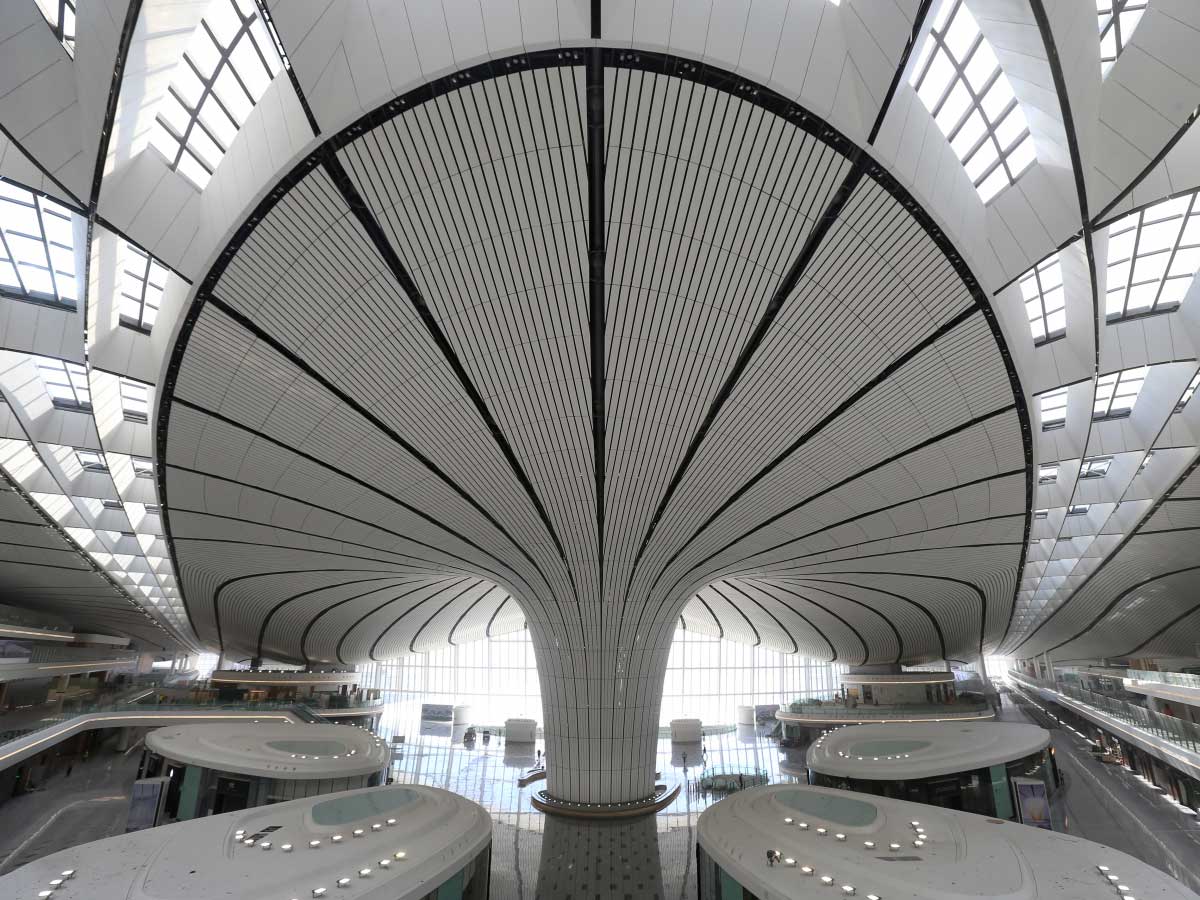
Daxing International Airport - 2019 - Pechino ©ZHA ©photo by Hufton+Crow
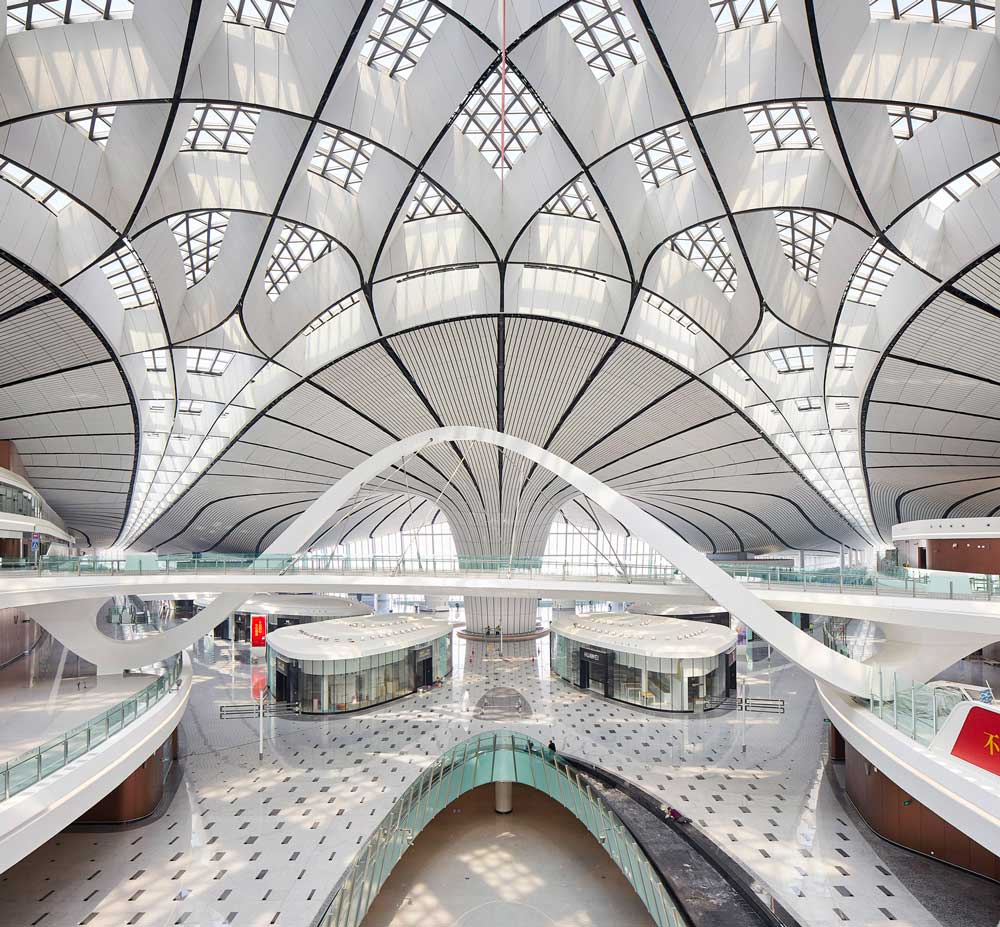
Daxing International Airport - 2019 - Pechino ©ZHA ©photo by Hufton+Crow
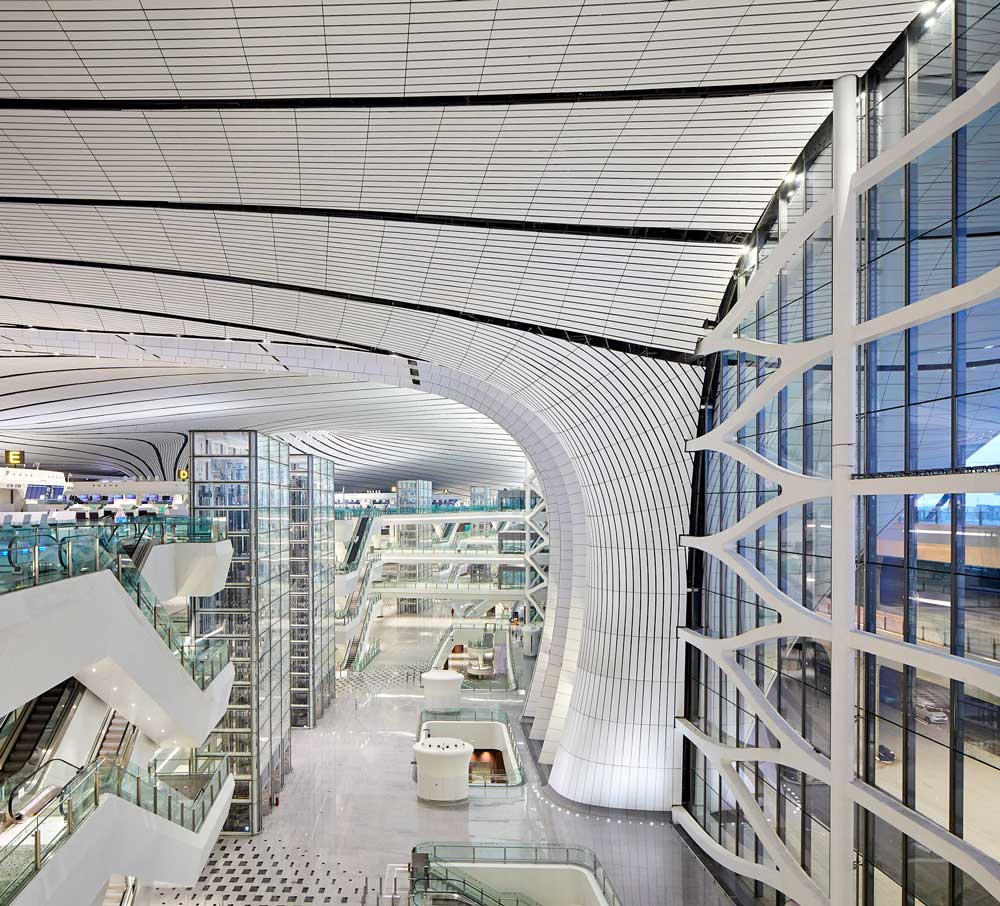
Daxing International Airport - 2019 - Pechino ©ZHA ©photo by Hufton+Crow.
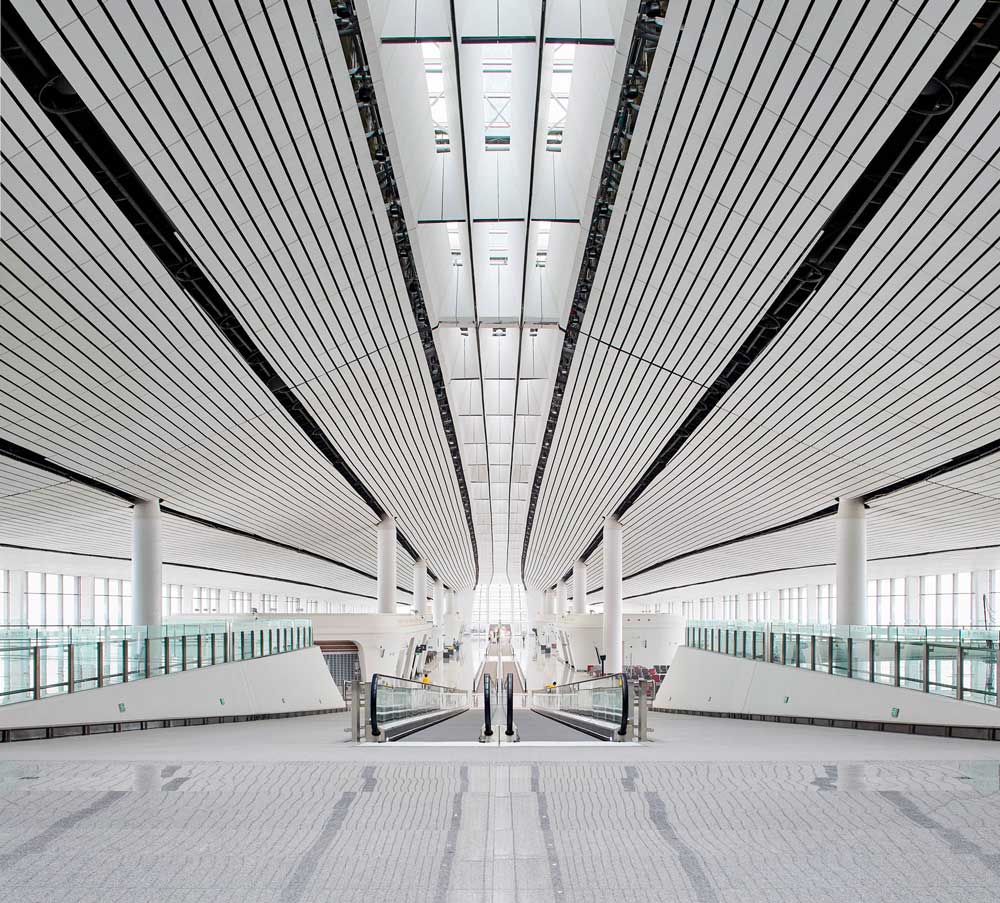
Daxing International Airport - 2019 - Pechino ©ZHA ©photo by Hufton+Crow
The entire complex is environmentally sustainable, powered by solar panels, equipped with a centralized heating system that recovers waste heat, and supported by a geothermal heat pump and a rainwater collection system.
LEEZA SOHO TOWERS – BEIJING
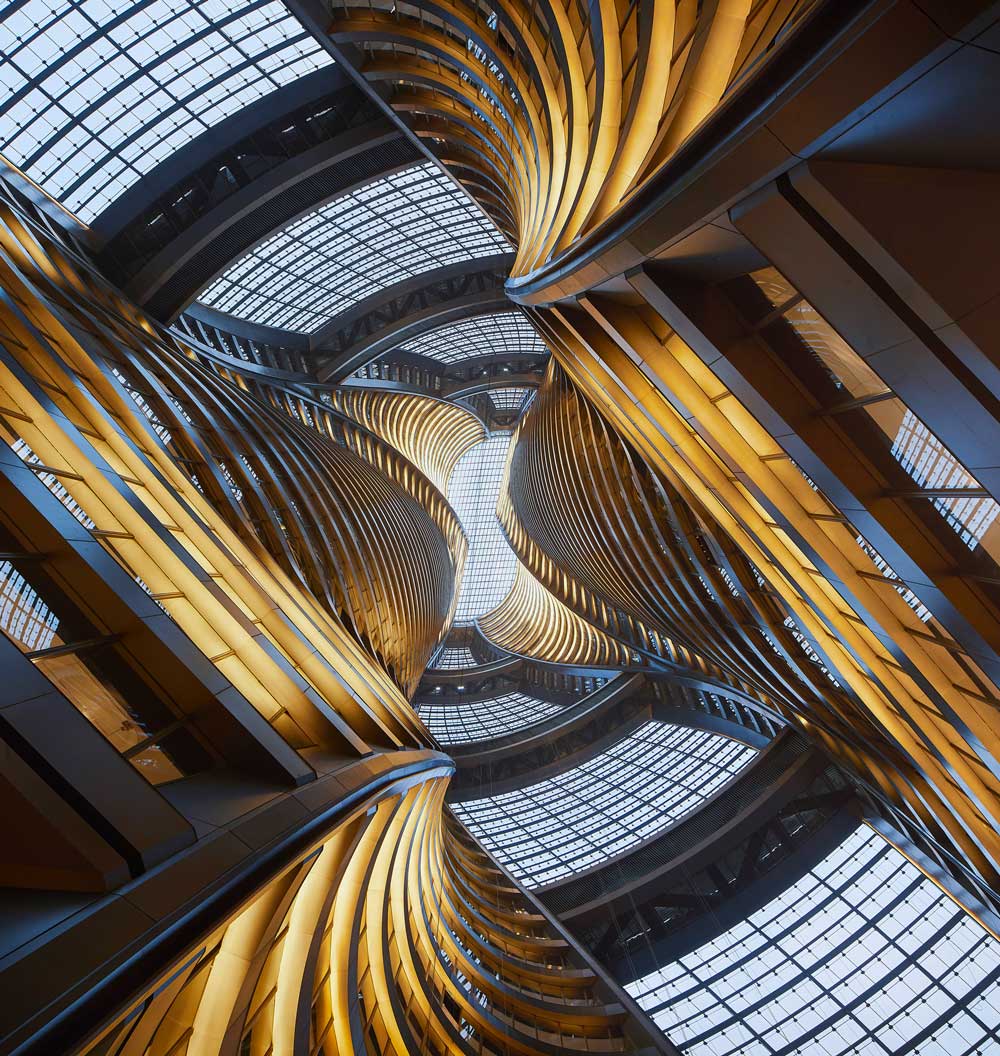
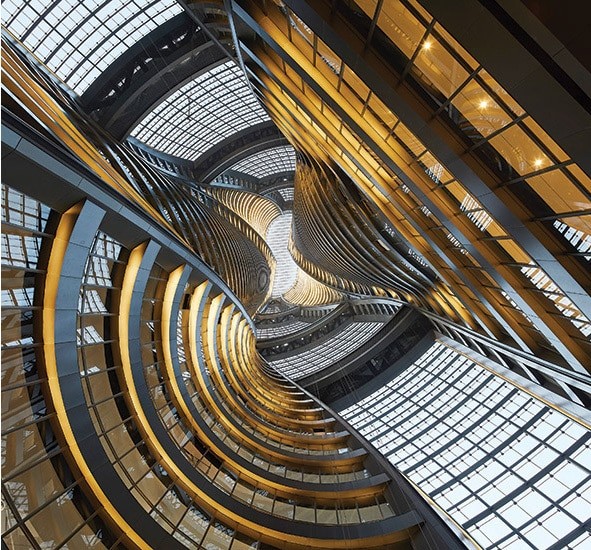
Commissioned by Soho China, the same developer behind constructions like Hong Kong’s Galaxy Soho and Beijing’s Wanjin Soho (both designed by Zaha Hadid), the Leeza Soho Towers in Beijing hold a world record – that of having the world’s tallest atrium (194 meters), surpassing the already famous atrium of the Burj Al Arab in Dubai, which is “only” 180 meters high.
Inaugurated in 2019, the building is constructed over an underground tunnel that serves the city’s subway, forcing the design of a building split in half, creating an empty and lightweight space at the center of the two buildings, corresponding to the tunnel.
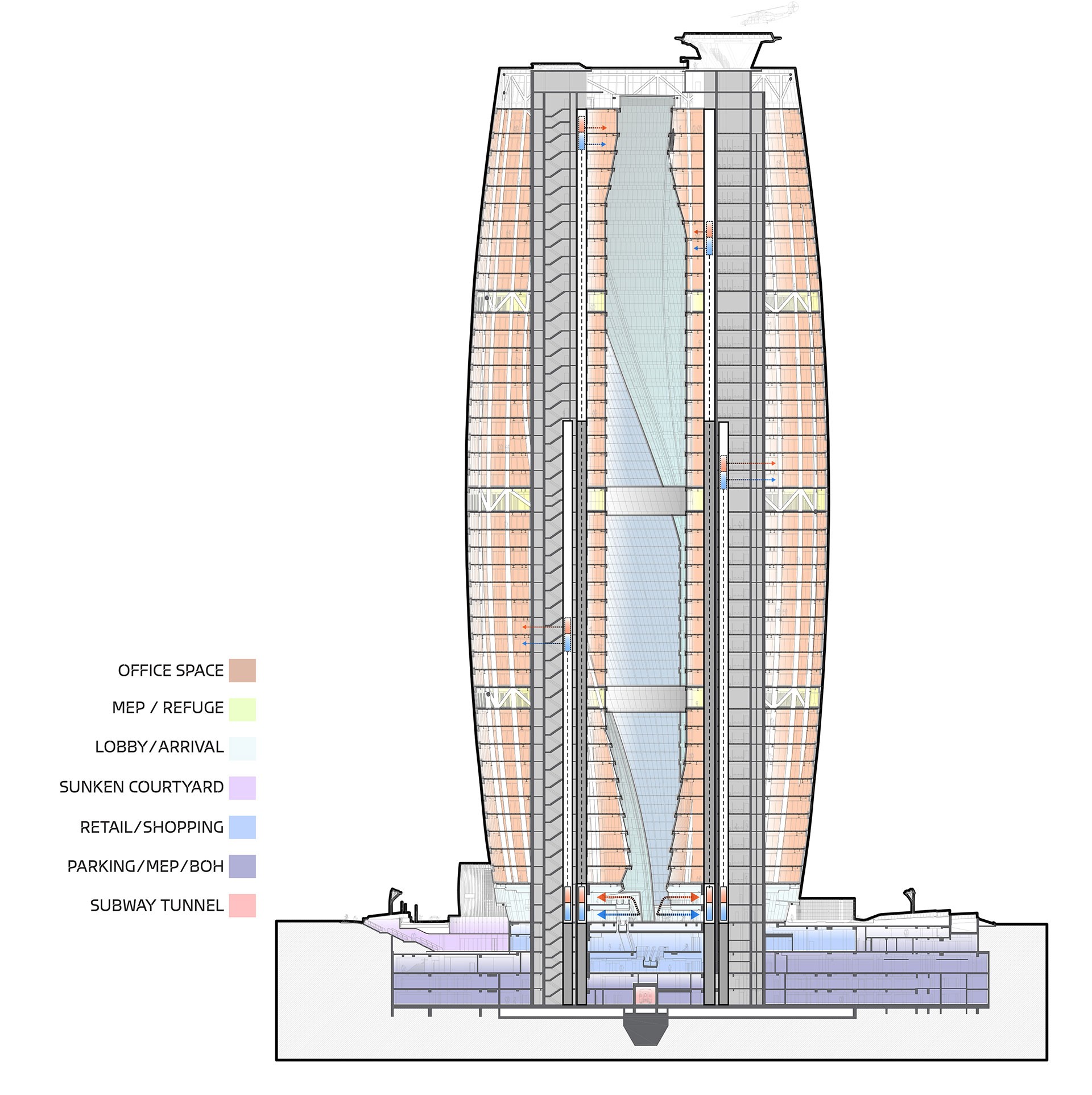
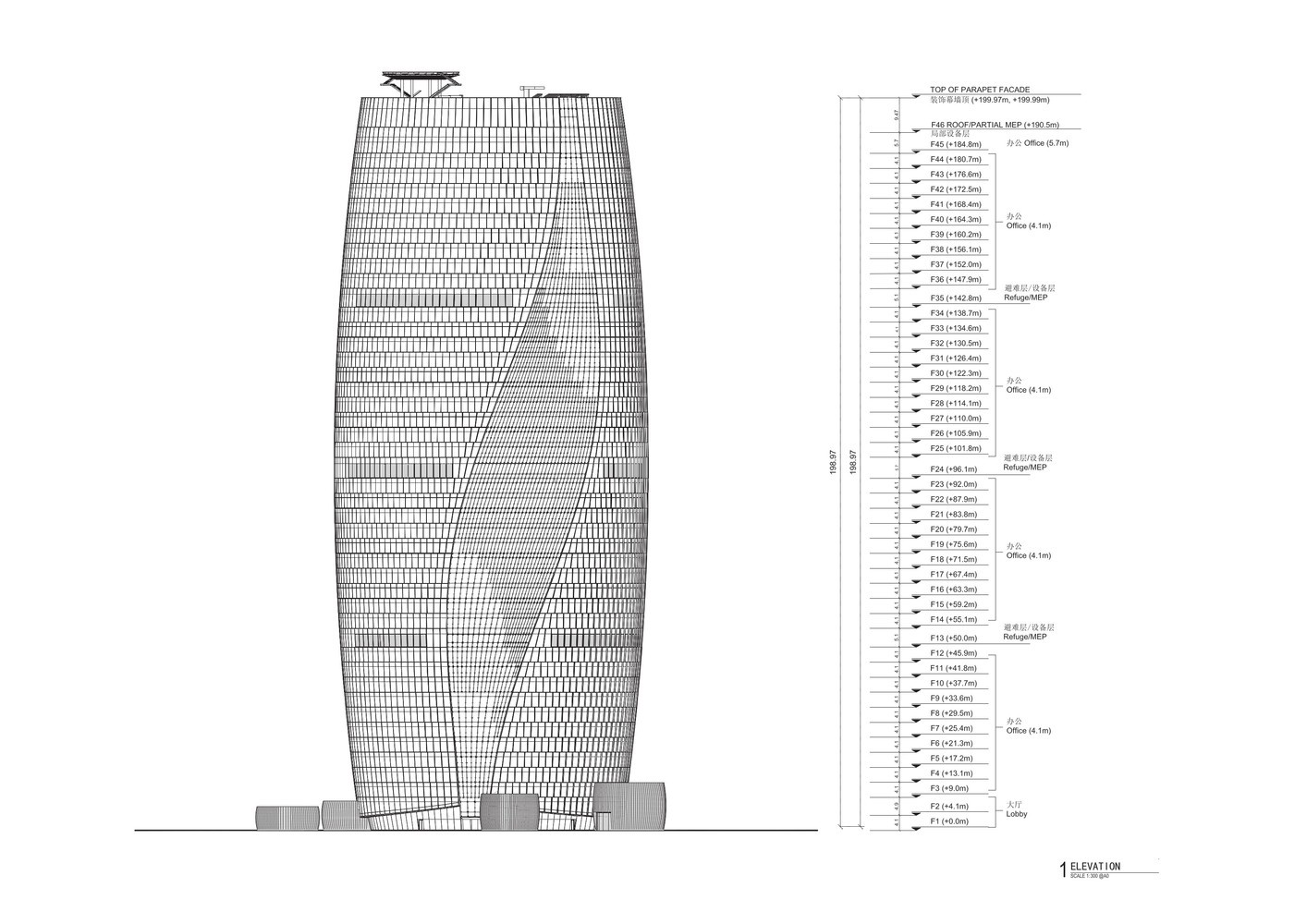
Leeza Soho conceals its complexity within an ellipsoid of stepped panels punctuated by two sinusoidal curves of transparent glass, which channel light into the world’s tallest atrium. This envelope connects two independent structures flanking the diagonally traversing subway tunnel.
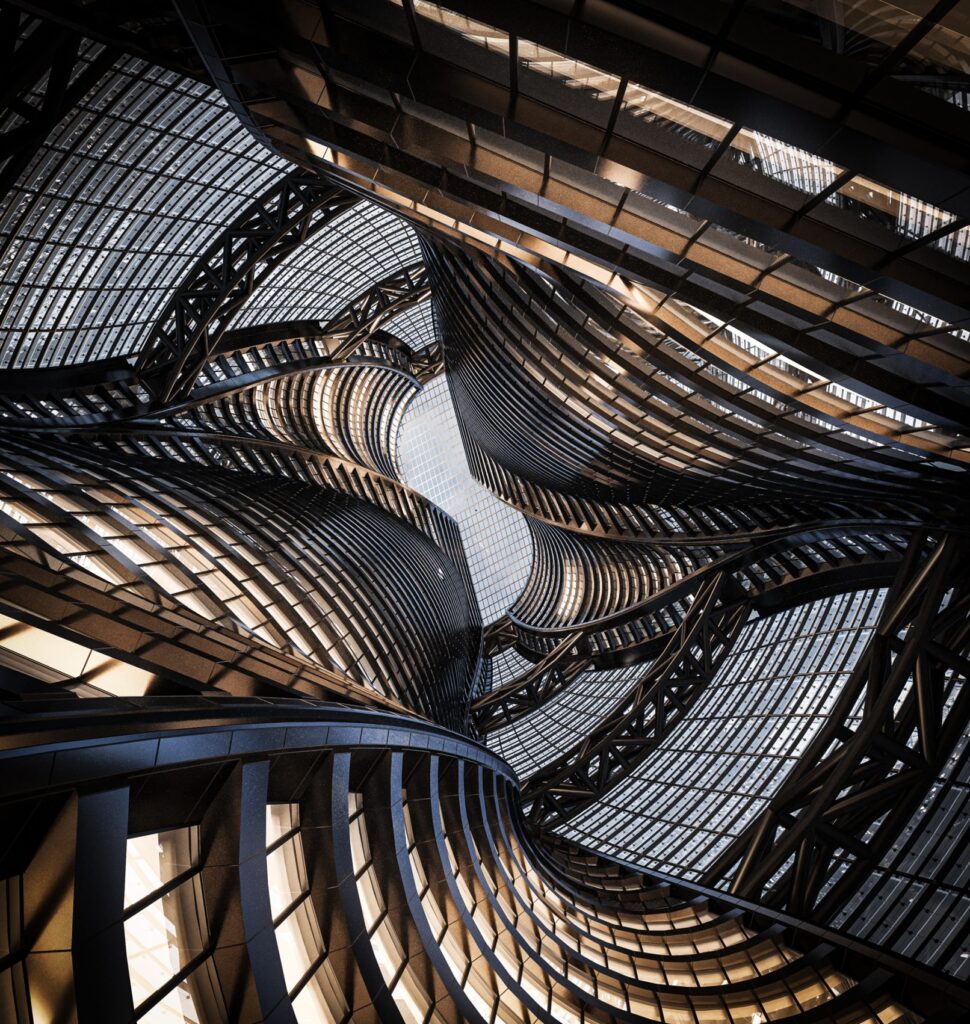
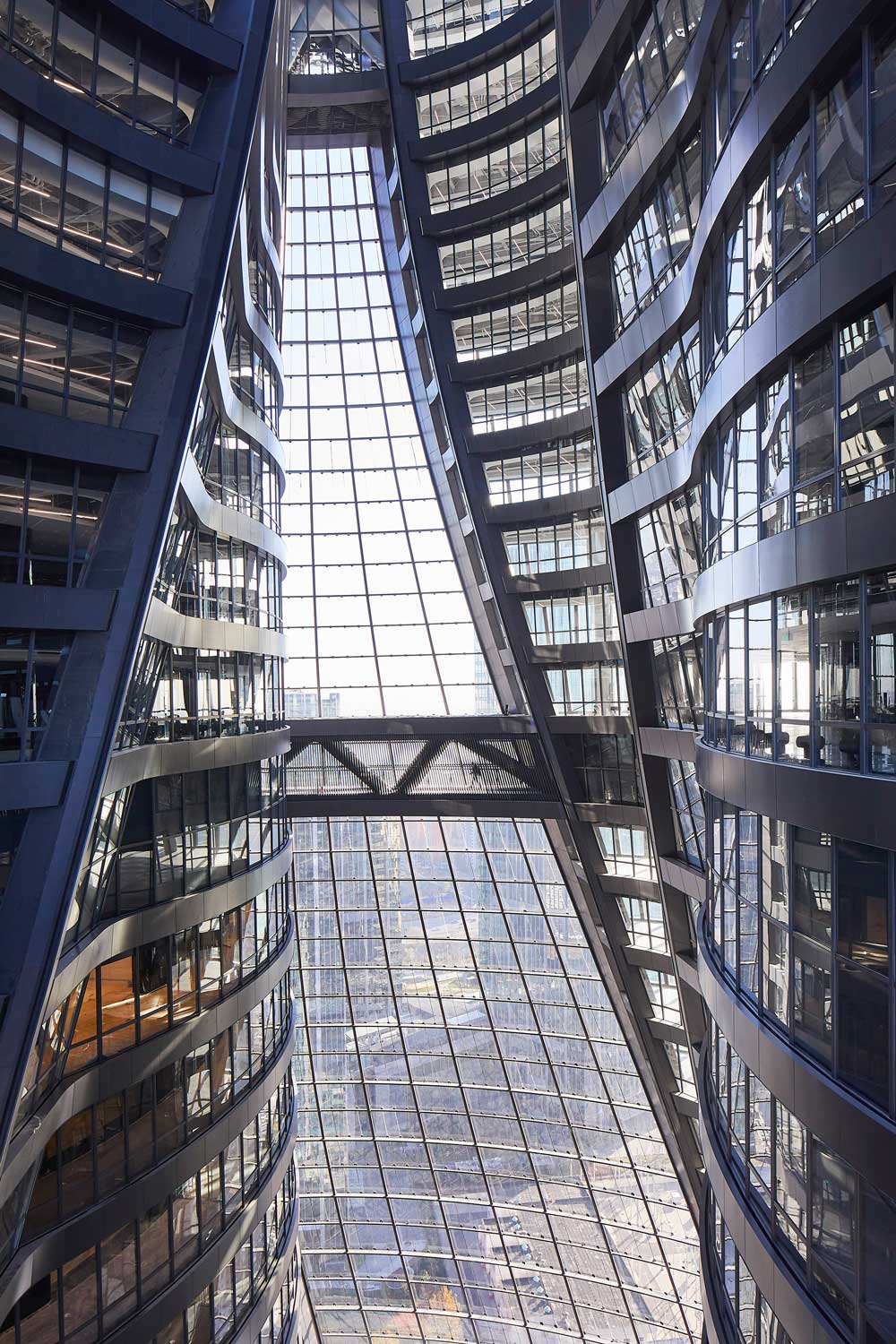
The two towers are linked through the atrium, which extends almost their entire height, with elevated walkways projecting through the void from floors 13, 24, 35, and 45. Meanwhile, on the outside, they are united by a fully glazed façade.
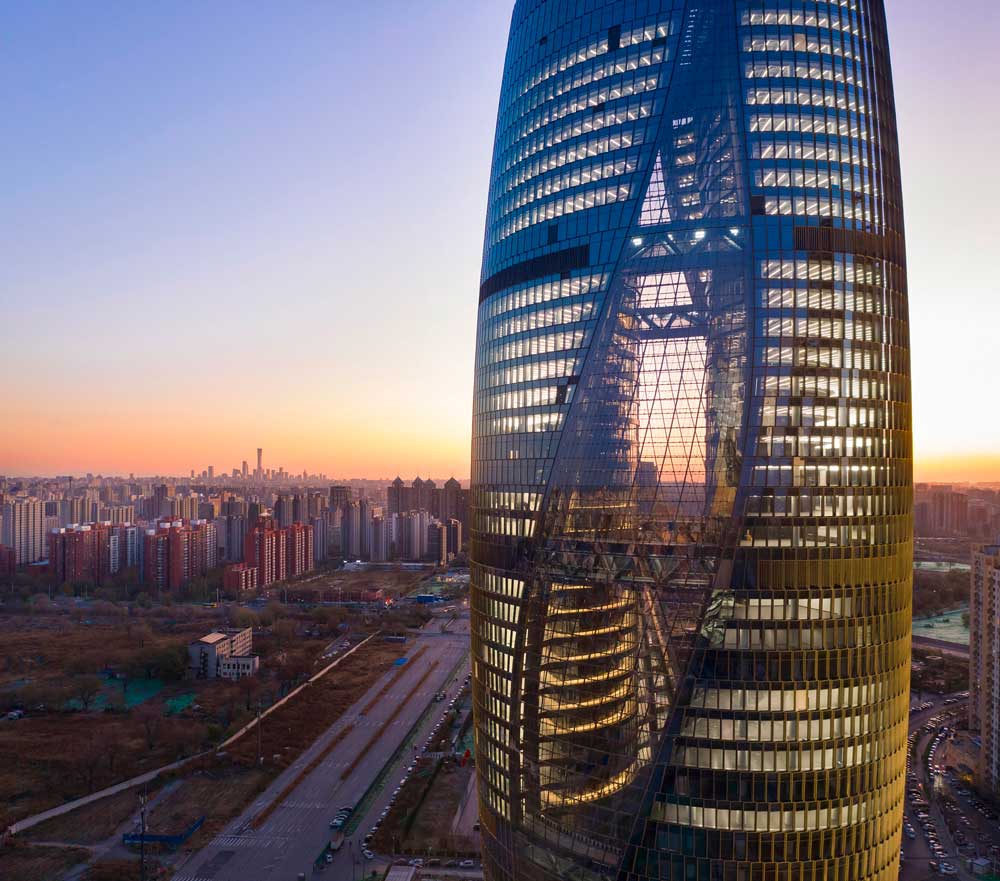
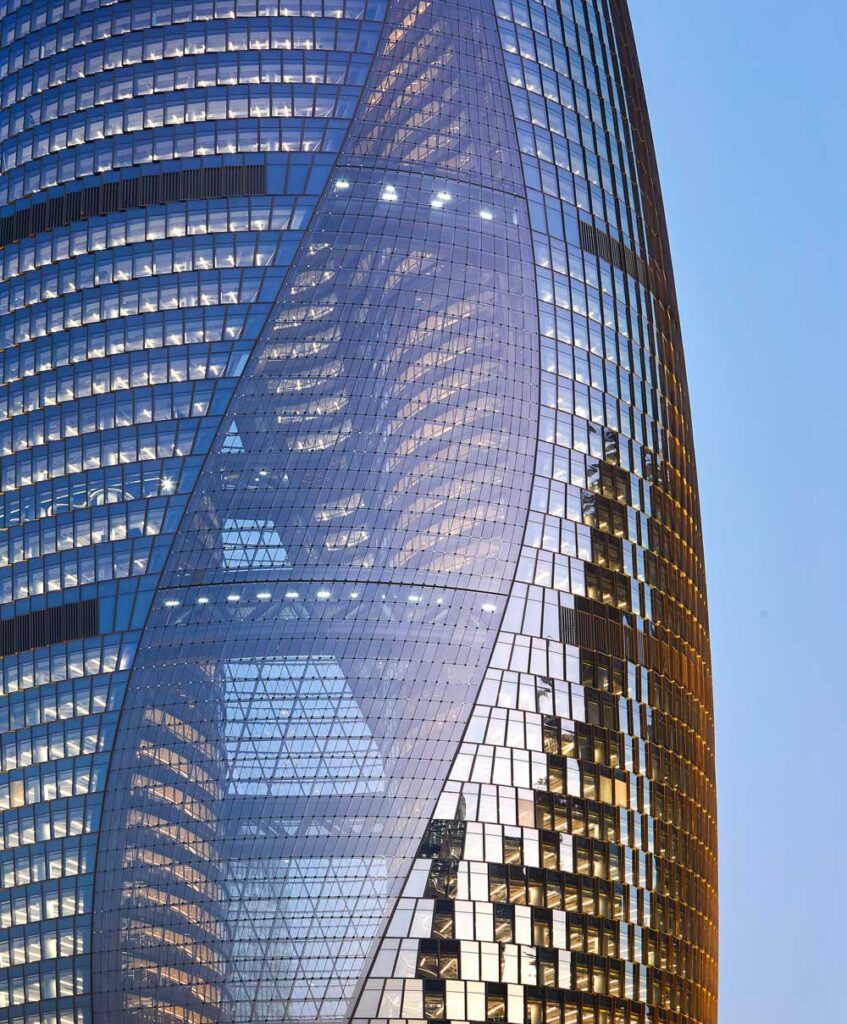
The atrium intertwines with the twin towers, each 46 stories high, with a 45-degree rotation in a dynamic “pas de deux” to align with the traditional north-south axis and the street grid of Beijing.
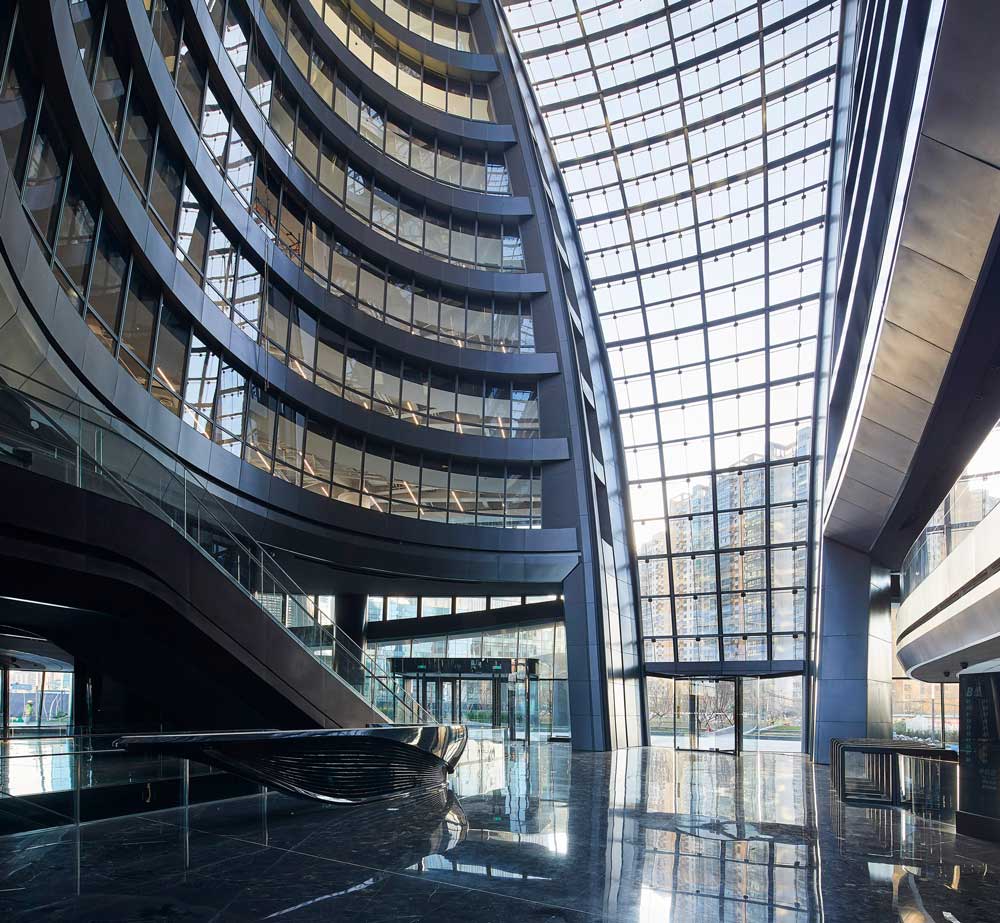
Leeza Soho’s atrium also serves as a public plaza for the new business district and is directly connected to the city’s transportation network.
The dynamic shape of the atrium creates convex openings on both sides of the tower, and thanks to its contorted and sculptural form, it allows natural light to penetrate the interiors, offering panoramic city views from every floor.
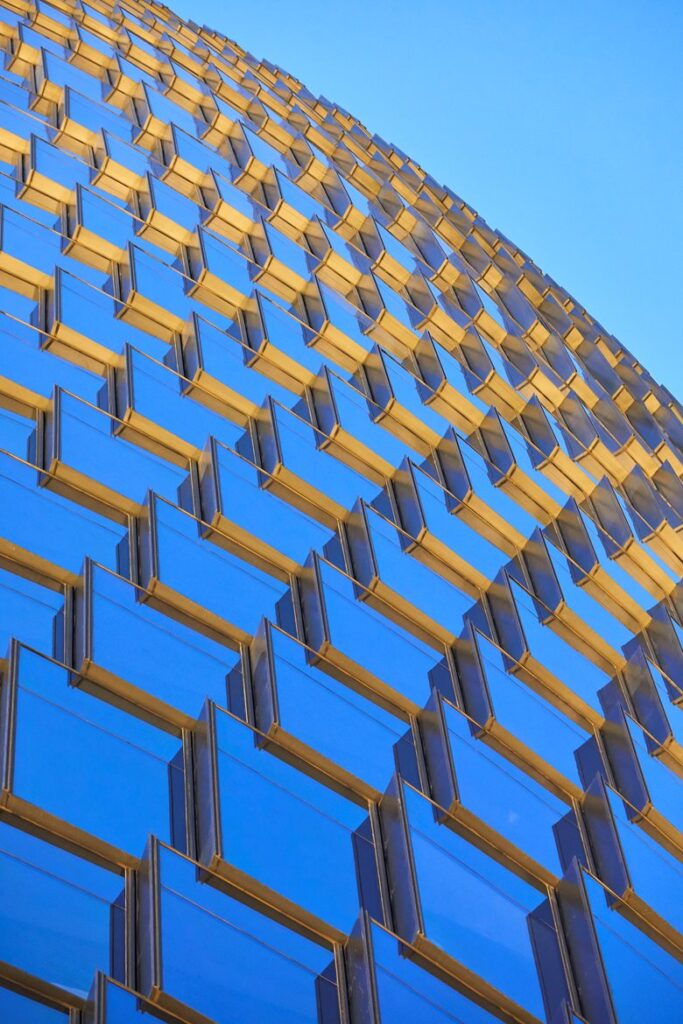
The outer skin is composed of a double-insulated glass system that ensures optimal temperature control and low energy consumption.
The glass units are adjustable and capable of opening or closing for internal ventilation. Advanced BIM technology (*) provides real-time environmental control and energy efficiency. It integrates heat recovery from exhaust air with high-efficiency pumps and fans, chillers, boilers, lighting, and controls, as well as water collection, greywater disposal, and landscape irrigation.
All of this contributes to maintaining a comfortable indoor environment despite extreme external weather conditions.
“Think big, act sustainably.” – Zaha Hadid
(*) Parametric and BIM
The revolution of parametric modeling in software lies in the fact that the idea of composing multiple objects to form a structure in its complexity is surpassed. Instead, it’s replaced by modeling the shape generated through an algorithm. This gives rise to computational design, a combination of artistic, functional, and construction factors.
In a straightforward manner, the designer only needs to input parameters into various software. This will yield the corresponding shape. Just as in complex parametric mathematics, where parametric data replaces Cartesian data. In this context, Building Information Modeling (BIM) finds application.
BIM, defined as the “digital representation of physical and functional characteristics of an object,” is a comprehensive process capable of modeling an entire building in multiple “dimensions”: 4D, encompassing construction scheduling; 5D, involving cost evaluation; and even up to 7D, incorporating environmental sustainability assessment. It’s a powerful tool that allows for the creation of unique parametric structures worldwide, in a simple and fast manner. (source: web)
Sources
Archdaily.com – e-architect.com – archilovers.com
©Giusy Baffi 2021
©The photos have been sourced from the internet and may be subject to copyright. The use of the images is solely for explanatory purposes. The intention of this blog is purely educational and informative. If the publication of the images were to infringe upon any copyright, please notify us via email at info@giusybaffi.com, and they will be promptly removed or the copyright will be cited as ©.
© The current website https://giusybaffi.com/ is not for profit, and any exploitation, reproduction, duplication, copying, or distribution of the Site’s Content for commercial purposes is prohibited.