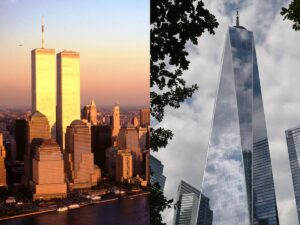
FROM THE TWIN TOWERS TO THE NEW WORLD TRADE CENTER: the story of an architectural, urban, and symbolic transformation
There are buildings that belong to a city. And then there are those that come to belong to the whole world.
The original World Trade Center—the iconic Twin Towers—were among them. They were not simply two skyscrapers rising over Lower Manhattan, but the defining visual symbol of an era. For decades, they embodied the very essence of American modernity: vast, perfectly symmetrical structures that reflected the ideals of economic expansion and financial strength.
Designed in the 1960s by architect Minoru Yamasaki, the towers emerged at a time when the United States was at the peak of its confidence in technology, economic prosperity, and urban renewal.
New York was undergoing a profound transformation. Manhattan was establishing itself as the capital of global finance, and there was a need for a landmark complex that could express that growing economic influence.
The Twin Towers were conceived with precisely that purpose: to stand as a physical manifestation of America’s role in an increasingly globalized world. By the 1980s and 1990s, the World Trade Center had become the quintessential image of the new global economy.
The towers were everywhere—featured in films, advertisements, postcards, television news reports, and in the shared imagination of millions across the globe.
They came to symbolize global capitalism, New York’s financial supremacy, America’s aura of invincibility, and a profound faith in human progress.
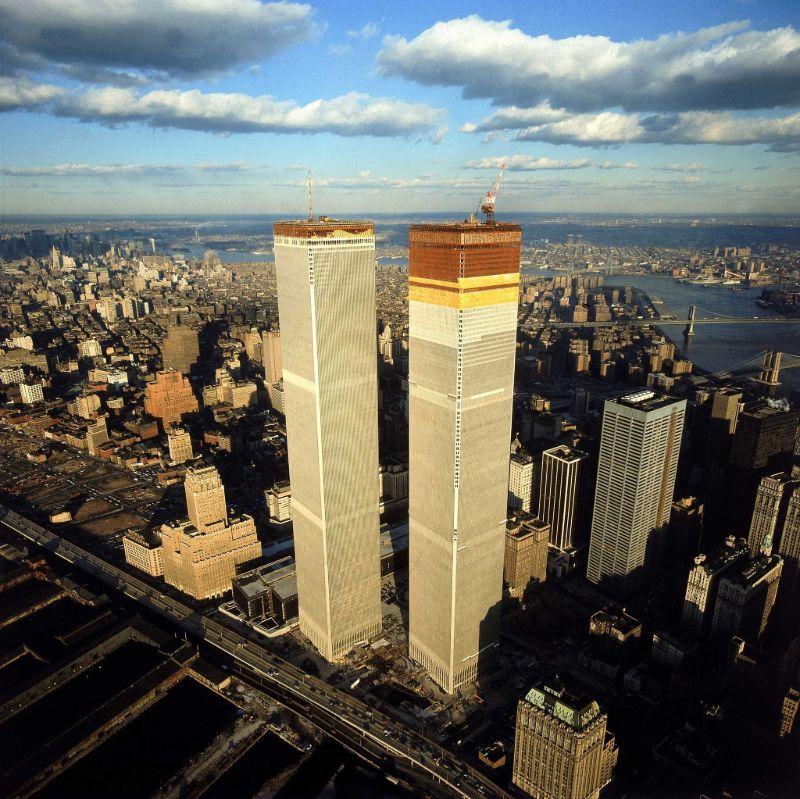
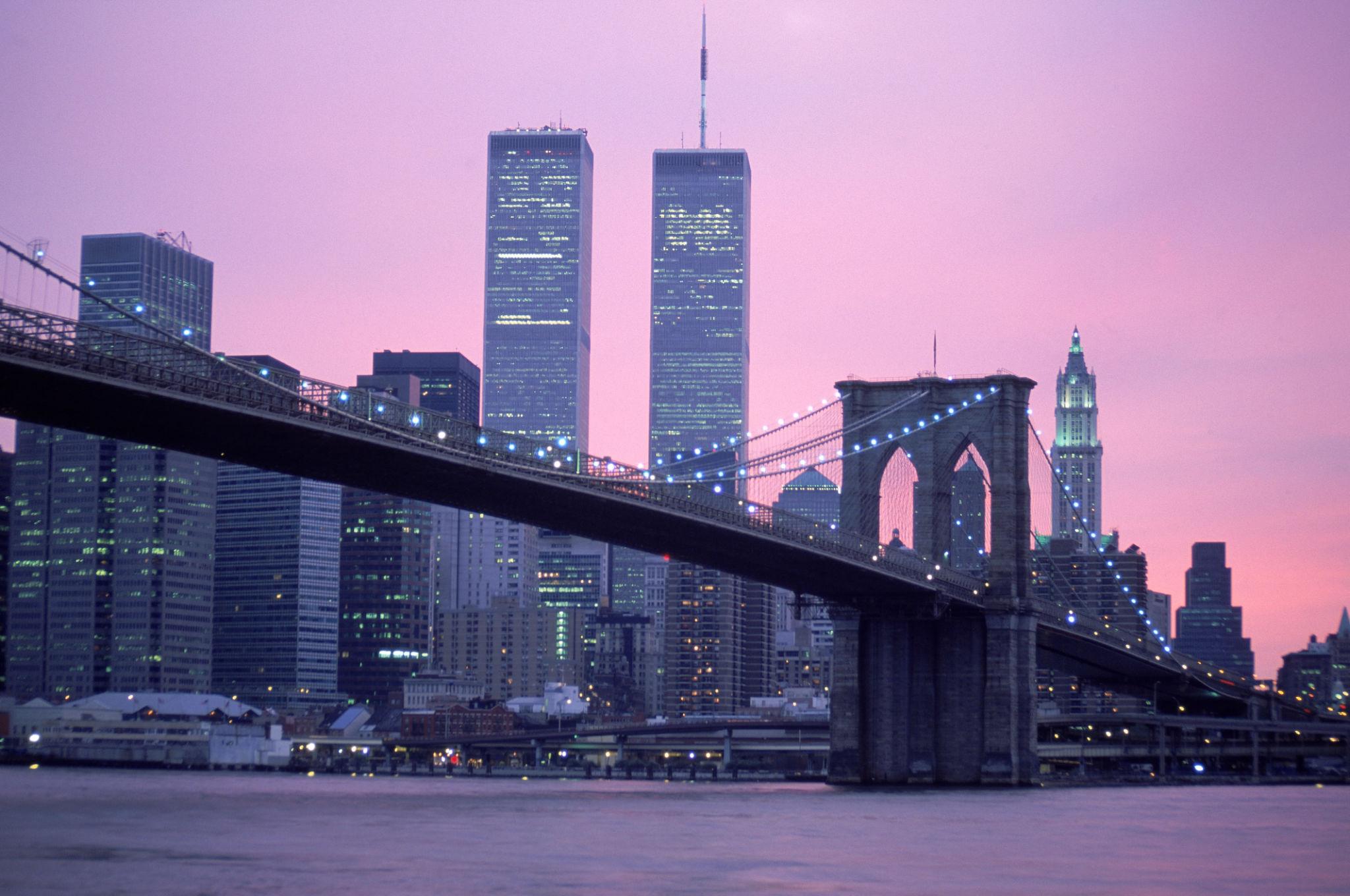
For their time, they were almost the stuff of science fiction. Two identical towers soaring more than 410 meters into the sky, vast walls of steel and glass, thousands of offices, high-speed elevators, and immense interior spaces.
Yet what made the greatest impression was their presence on the skyline. The towers seemed to stretch endlessly upward.
Even their design reflected the philosophy behind them.
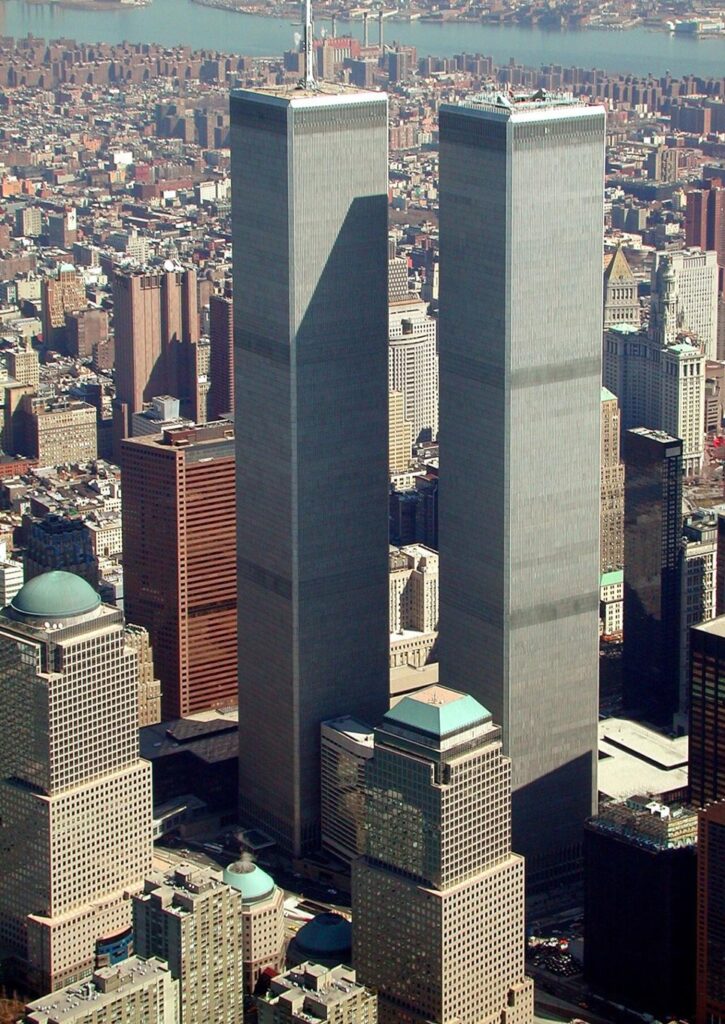
The repetitive, modular façades projected order, rationality, and efficiency. The expansive open floor plans embodied the principles of modern corporate life. Every
element was engineered to maximize functionality and productivity.
Even the plaza between the towers was shaped by the same urban vision: vast, monumental, and almost abstract in its scale and simplicity.
More of a scenic space than a place truly lived in by the city’s residents.
Ultimately, the World Trade Center had been conceived primarily as a gigantic economic machine.
 (web photo)
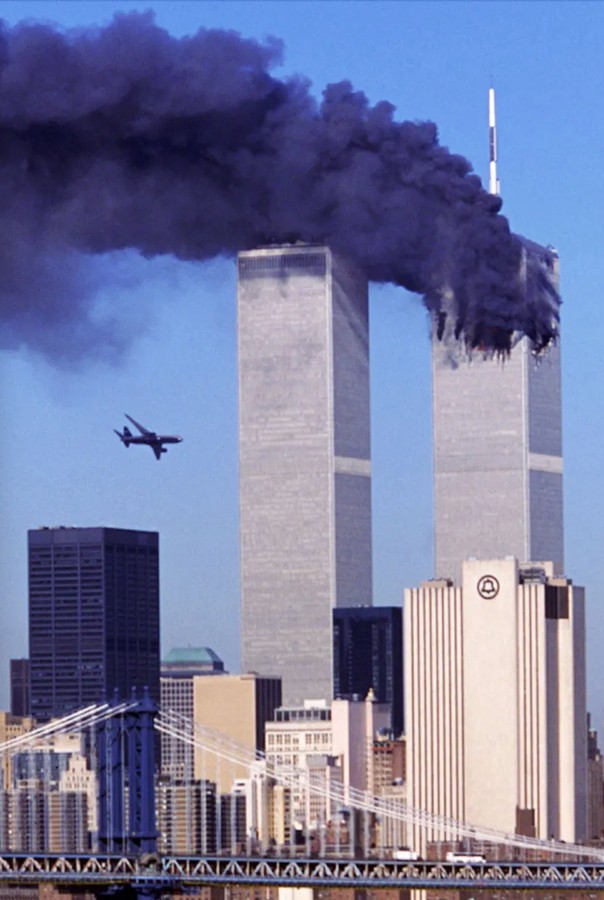
The terrorist attacks of September 11, 2001, caused the collapse of the towers and the deaths of nearly 3,000 people. In addition to the human tragedy, the city lost one of its most recognizable symbols.
(web photo)
In the months that followed, a profound debate arose over the site’s future. The core question was a difficult one: how could it be rebuilt without erasing what had been lost? Simply replacing the destroyed structures was not enough; the challenge was to create a space that could honor collective mourning while also bringing new life back to Lower Manhattan.
The Daniel Libeskind Master Plan
In 2002, an international design competition chose Daniel Libeskind’s proposal as the foundation for the site’s reconstruction. His concept envisioned preserving the original footprints of the Twin Towers, establishing a vast public space devoted to remembrance, constructing new skyscrapers that would define the architecture of the 21st century, and reconnecting the area more seamlessly with the urban fabric of Manhattan.
While the plan was significantly revised over time, its guiding principle remained unchanged: to turn Ground Zero into a place where memory and the future exist side by side.
One World Trade Center: the new beacon of the skyline
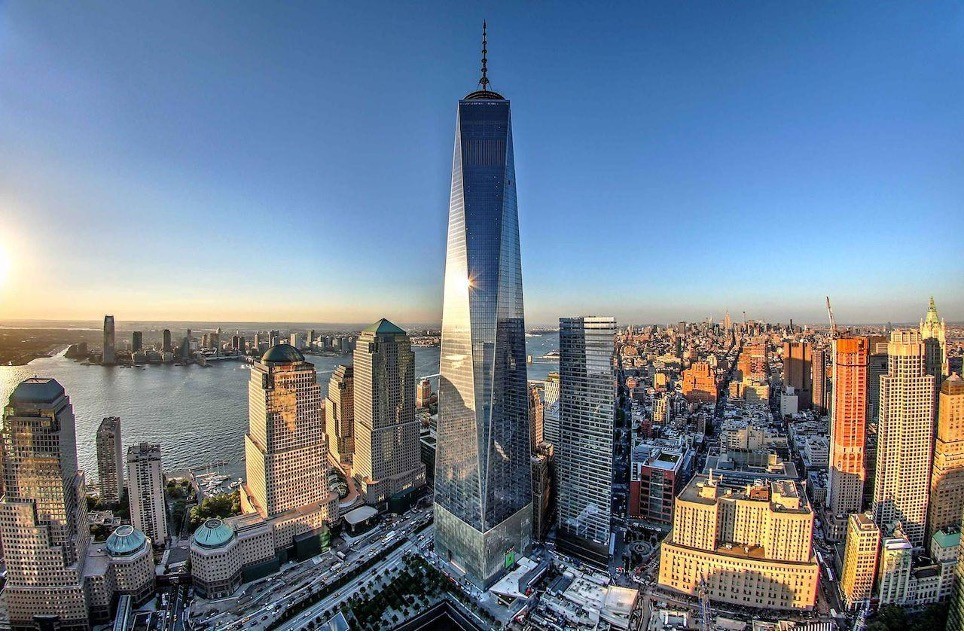
At the center of the new complex stands One World Trade Center, designed primarily by David Childs of Skidmore, Owings & Merrill and officially opened in 2014.
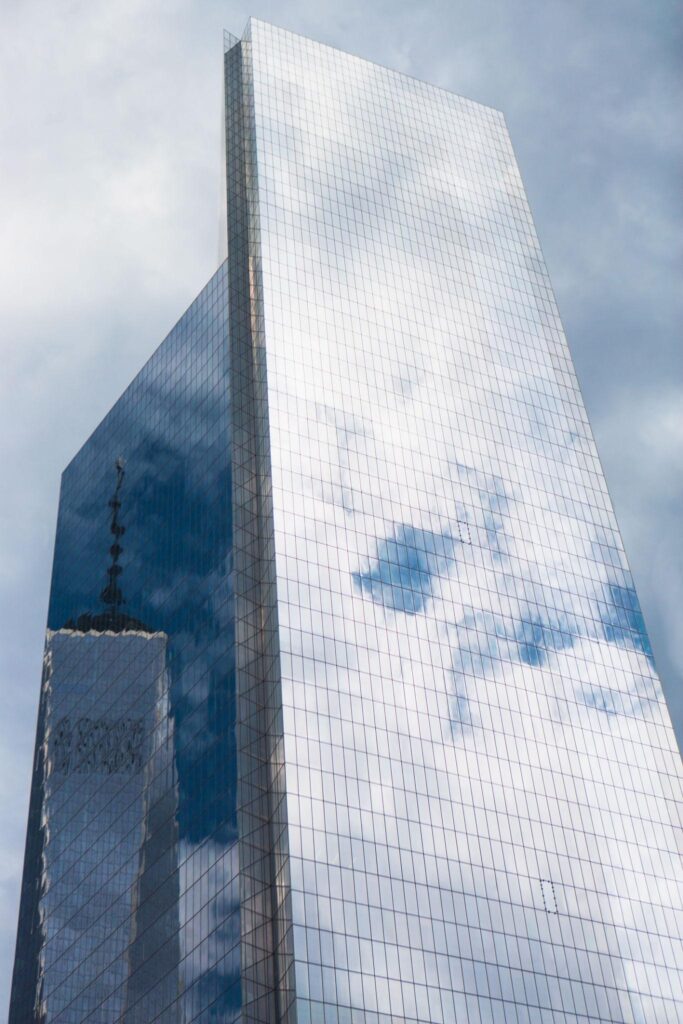
The tower rises to the symbolic height of 1,776 feet (541 meters), a deliberate reference to the year of the United States Declaration of Independence. Rather than replicating the Twin Towers, it adopts a contemporary architectural language: a strong, fortified base that gradually gives way to a luminous, reflective glass façade.
 Skidmore, Owings & Merrill (SOM), One World Trade Center, New York, USA 2014. Courtesy SOM
(web photo)
One World Trade Center is today the tallest skyscraper in the Western Hemisphere and represents the new emblem of New York, not as a replacement for the past, but as a symbol of rebirth.
Reflecting Absence: Memory Transformed into Landscape
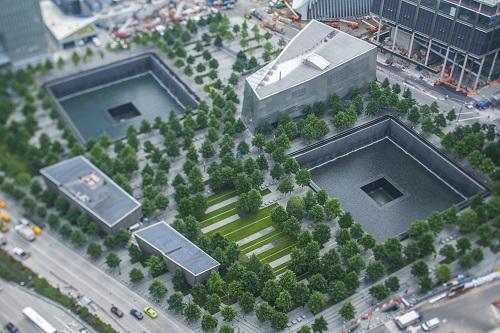
The most powerful element of the entire project is the Reflecting Absence memorial, conceived by architect Michael Arad in collaboration with landscape architect Peter Walker.
The memorial is located exactly within the footprints of the two destroyed towers. Two vast square reflecting pools, bordered by continuous waterfalls, flow downward into a central void.
(web photo)
Water flows continuously, creating an effect of meditation and absence that gives the work its name. Arad’s idea was not to fill the absence, but to make it visible. The pools do not celebrate the monumentality of the lost towers; instead, they transform their void into a sensory and collective experience.
The names of the victims of the September 11, 2001 attacks are inscribed on bronze parapets surrounding the pools. The result is a public space of extraordinary emotional intensity, where emptiness becomes an integral part of the architecture.
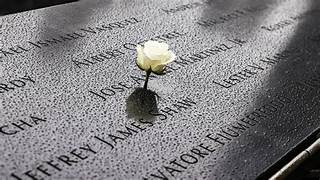
(web photo)
Next to the memorial stands the 9/11 Museum, designed by Snøhetta, which preserves artifacts, testimonies, and documents related to the events.
The Oculus by Santiago Calatrava: Infrastructure and Symbol
Among the most spectacular works of the new World Trade Center stands the Oculus, the transportation hub designed by Spanish architect and engineer Santiago Calatrava.
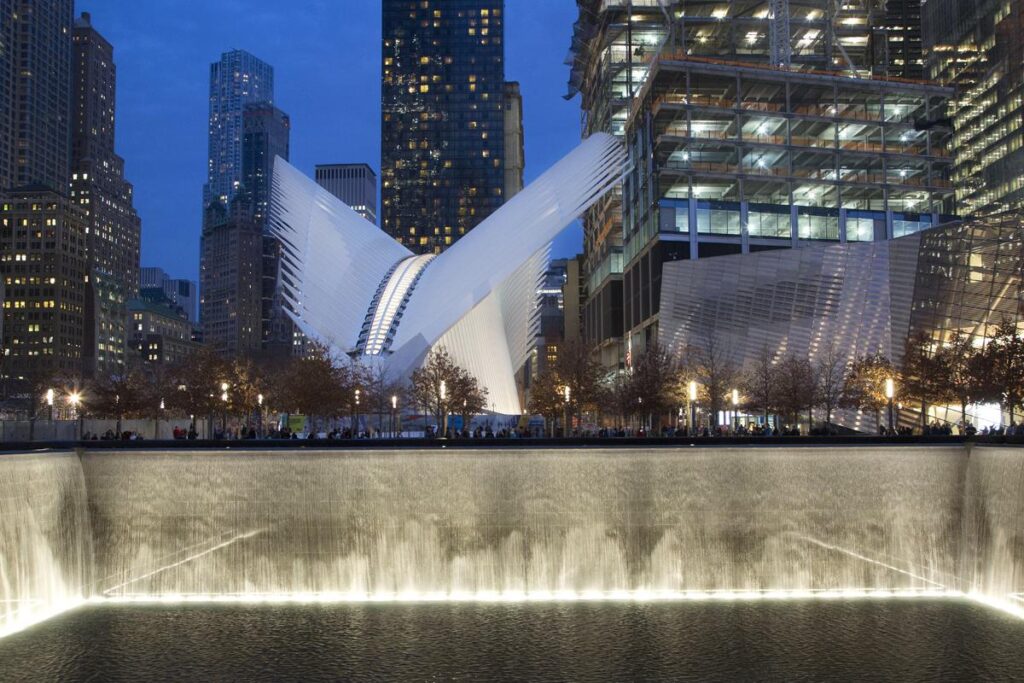
(web photo)
Inaugurated in 2016, the Oculus connects several subway lines and PATH trains to New Jersey, serving as a key hub for urban mobility. But its importance goes beyond its practical function.
Calatrava envisioned the building as “a bird released from a child’s hands,” a white, luminous form opening up toward the sky.
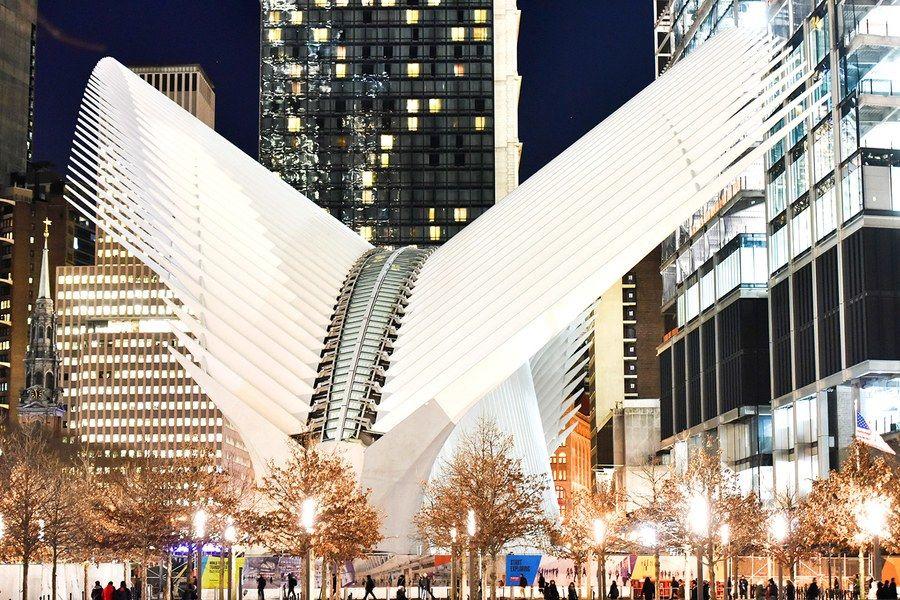
(web photo)
The structural ribs resemble outstretched wings, while the vast central nave floods the interior with natural light.
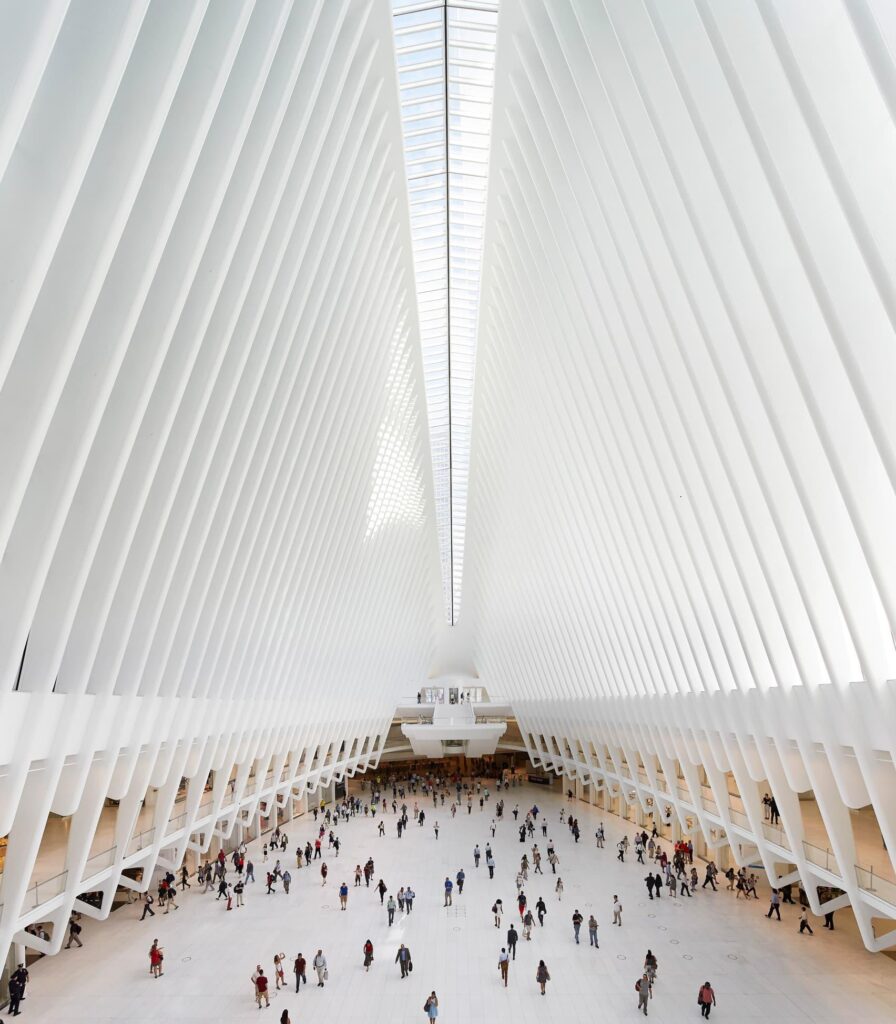 (web photo)
The Oculus represents the most optimistic dimension of the reconstruction: movement, openness, and connection. In a site marked by tragedy, Calatrava’s architecture introduces a sense of lightness and rebirth.
There has been no shortage of criticism regarding the high costs and construction complexity of the project, but the terminal quickly became one of the most photographed places in New York and a new urban landmark.
A New Centrality for Lower Manhattan
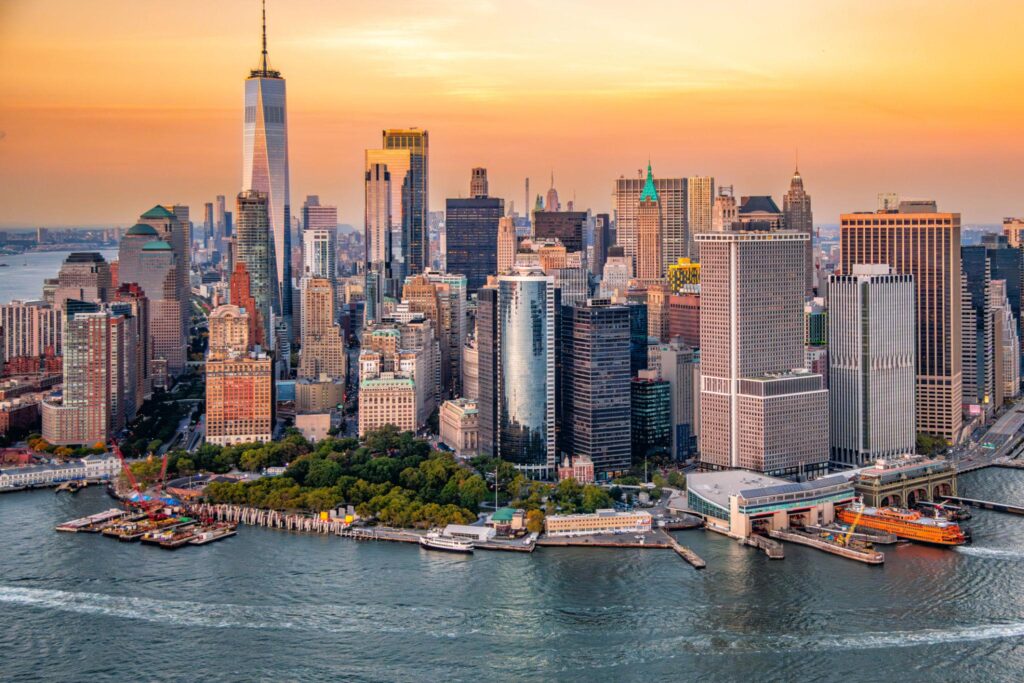
The transformation of the World Trade Center has reshaped the entire Lower Manhattan district. Beyond the new skyscrapers and commemorative spaces, the project has improved public transportation links, the quality of pedestrian areas, the presence of green spaces and public plazas, and the integration of financial, cultural, and tourist functions.
Ground Zero has become a place experienced daily by workers, residents, and visitors, not just a static memorial.
Architecture, Memory, and Resilience
From the Twin Towers to the new World Trade Center, New York has followed a path that extends far beyond mere rebuilding. It has turned a collective wound into an urban project that looks firmly to the future without erasing the past.
Today, the site functions simultaneously as a memorial, a financial district, a transport hub, and a cultural destination. The absence of the lost towers is still felt, yet new architectural works—from One World Trade Center to the Oculus—demonstrate the city’s capacity to reinvent itself and move forward.
Michael Arad’s memorial turns absence into shared remembrance; Calatrava’s design reintroduces motion and light to a place marked by loss.
Together, these works tell a story of urban resilience that is rare in modern history.
 (web photo)
© Giusy Baffi – June 2026
©Photos have been sourced from books and catalogs or online and may be subject to copyright. The use of images and videos are for explanatory purposes only. This website and blog claim no credit for any image posted unless otherwise noted. Images on this website and blog are copyrighted to its respectful owners. If there is an image appearing on this blog and website that belongs to you and do not wish for it to appear on this site, please email to info@giusybaffi.com and it will be promptly removed or copyright © cited.
© This site https://giusybaffi.com/ is not for profit and any exploitation, reproduction, duplication, copying or distribution of the Site Content for commercial purposes is prohibited.